Saturday, August 10, 2024

NYRB: America’s Descent (Democracy and Autocrats and WTF)


American Descent

Ben Rhodes

Reviewed:

The Wannabe Fascists: A Guide to Understanding the Greatest Threat to Democracy

University of California Press, 250 pp., $24.95

by Federico Finchelstein

America Last: The Right’s Century-Long Romance with Foreign Dictators

Liveright, 249 pp., $28.99

by Jacob Heilbrunn

In March thousands of Russians gathered in Moscow’s Red Square to celebrate Vladimir Putin’s reelection, waving tricolor flags before the jubilant domes of Saint Basil’s Cathedral. The rock band Lyube, whose nationalist music has been a soundtrack for Russian soldiers in Ukraine, performed. Three Kremlin-approved losing candidates showed up as a demonstration of their fealty. Putin appeared triumphant onstage, his awkwardly ageless face magnified on the JumboTrons. He welcomed the illegally annexed Ukrainian territories of Donetsk, Kherson, Luhansk, and Zaporizhzhia into the bigger, beautiful Russia that he was building. “We will move on together, hand in hand,” he declared.

Behind this tightly controlled scene lay a grim reality. Putin’s chief political opponent, Alexey Navalny, had died about a month earlier in a prison north of the Arctic Circle. After years of state-sponsored poisonings, persecution, and brutal imprisonment, the exact circumstances of his death were murky, but there should be no doubt that Putin was responsible. Even relatively obscure candidates running against him had been struck from the ballot. The election in which Putin declared victory was anything but free and fair. In Russian-occupied parts of Ukraine, voting took place in areas where children have been kidnapped and civilians tortured. Within Russia’s recognized borders, voicing private criticism of the war can get you thrown in jail, and even critics outside of Russia’s borders are pursued.1 

Putin declared that “we know what it means to fight for one’s country.” The final count showed that he won over 87 percent of the vote, but it was impossible to know how much of the triumphant patriotism he heralded was real, how much was false, and how much was compelled.

This year, 2024, has been called the “year of elections.” Almost half the world’s population lives in countries that will be voting this year. It should be a global watershed. But scenes like Putin’s victory rally make it feel less like an international celebration of democracy than an extended wake, as a succession of nationalist autocrats flex their political muscles and entrench their own power.

Consider some of the results to date. In Bangladesh, Prime Minister Sheikh Hasina detained thousands of her political opponents on the way to winning a fourth consecutive term. In El Salvador, Nayib Bukele—the self-proclaimed “world’s coolest dictator”—ignored his country’s law on term limits and was reelected with a margin approaching Putin’s. In Indonesia, a former general accused of human rights abuses surged to victory thanks in part to his running mate, the thirty-six-year-old son of the current president, who was allowed to run despite a law setting forty as the age requirement (it may have helped that his uncle led the constitutional court).2 In France, the far right made unprecedented gains in European Union parliamentary elections, though an unusual coalition of leftist and centrist parties was able to beat back the right-wing tide in the subsequent national election. And in India—in the largest election held in human history—even surprisingly close results led to a third term for Narendra Modi, the strongman Hindu nationalist whose government has jailed opponents, restricted civil society, and intimidated journalists.

The United States is no exception. Our election features two men who have already been president and have lived for a combined 159 years. Donald Trump, who tried once to cling to power through extrajudicial means, has already been convicted of falsifying business records about hush money payments to a porn star. His campaign aims to legitimize his past crimes while pledging retribution against his political enemies, which has only deepened the fervor of his support among a broad swath of the American electorate.

Notably, Trump has embraced his fellow travelers in autocratic nationalism. Already this year he has twice hosted the Hungarian prime minister Viktor Orbán at Mar-a-Lago; embraced Argentina’s new populist president, Javier Milei; described his “very beautiful” relationship with North Korea’s Kim Jong Un; and said that if he is reelected he will tell Putin that Russia can do “whatever the hell they want” to some NATO allies.

At February’s Conservative Political Action Conference (CPAC) in Maryland, Bukele thrilled a crowd with a shared set of enemies by declaring, “They say globalism comes to die at CPAC. I’m here to tell you that in El Salvador it’s already dead. ” In his own speech at the conference, Trump sounded familiar themes. “November 5 will be our new liberation day,” he announced. “But for the liars and cheaters and fraudsters and censors and impostors who have commandeered our government, it will be their judgment day.” To my eyes, November 5 looks like a judgment day for democracy itself.

Because they do not represent a single coherent ideology like communism or national socialism, it can be hard to make sense of why such a similar collection of autocrats from such different parts of the world have ascended at the same time. How should we understand the political trend they represent? That’s the question at the heart of the Argentine historian Federico Finchelstein’s new book, The Wannabe Fascists.

While Finchelstein’s casual title may inadvertently downplay the crisis facing global democracy, it does convey that we have reached a tipping point. For years we have debated how much danger Trump and strongmen like him pose. Are they just a collection of populists using grievance-based nationalism to gain power? Or do they represent a new wave of fascism leading to persecution, political violence, dictatorship, and war?

That darker possibility has recently been coming into focus. In countries like India and Hungary, nationalist political parties have used electoral success to advance their domination of the state. In Ukraine and Gaza, brutal wars are being waged by ethno-nationalist leaders, Vladimir Putin and Benjamin Netanyahu. In the United States, Trump is open about returning to power with a far more developed program to hollow out the administrative state, install loyalists across the government, and use the powers of the federal government to serve his personal interests. “We will demolish the deep state,” Trump promised at a rally in Claremont, New Hampshire:

We will throw off the sick political class that hates our country. We will rout the fake-news media until they become real…. We will root out the communists, Marxists, fascists, and the radical-left thugs that live like vermin within the confines of our country.

These words echo fascist rhetoric from history, but is Trump really a fascist? Finchelstein situates him somewhere along a spectrum. “Wannabe fascism is an incomplete version of fascism,” Finchelstein argues, “characteristic of those who seek to destroy democracy for short-term personal gain but are not fully committed to the fascist cause.” In other words, Trump and many of the autocrats driving global politics have enlisted aspects of fascism when it suits them, without knowing just how far they will go with it. “I see them as a dangerous threat to democracy, extremists who have not (yet) reached the levels of ideological fervor, violence, and lies achieved by historical fascists,” Finchelstein writes. “Wannabe fascists do not openly advocate for fascism, but they gravitate toward fascist political styles and behaviors.”

Finchelstein is a scholar of populism as well as fascism, and he offers useful historical background for understanding the difference between the two, drawing on the example of Juan Perón, the right-wing populist who governed Argentina after World War II. Perón had the same enemies as the fascists—chiefly, liberals and socialists. He also had a similar conception of the justness of his rule—that through his intangible connection to “the people,” a populist leader is imbued with a legitimacy that transcends laws and institutions. But in Perón’s time, fascism had been discredited by the defeat of Hitler, Mussolini, and imperial Japan, so Perón and other postwar populists generally acceded to the rule of elections and limits on their dictatorial ambitions. (Of course, the twentieth century’s record of coups and military governments occasionally demonstrated how tenuous that discipline could be.)

It is the strength of that thin line between right-wing populism and fascism that is now being tested. In many different parts of the world, the playbook has become familiar: a right-wing populist harnesses the backlash to globalization’s failures to win an election on a grievance-filled us-versus-them platform. Cronies, enriched via corruption, finance the leader’s political agenda. Courts are packed with judges who allow further power grabs. Parliamentary districts are redrawn to entrench the ruling party. Voting laws are altered to favor certain parts of the population. The media is turned into an extension of the ruling party’s interests, while independent journalists are threatened, deplatformed, or imprisoned. Social media is used to monitor, intimidate, and demoralize political opponents. Civil society is demonized, harassed, or restricted.

Since 2000 Putin has worked through a version of this playbook to transform Russia from a nascent democracy to the elected dictatorship that it is today. Orbán mimicked Putin’s approach in the next decade with remarkable success, which is one reason he receives such fervent support from imitators on the American right. So methodical was Orbán’s reengineering of democratic institutions after his 2010 electoral victory—he rewrote the constitution, redrew parliamentary districts, and had friendly oligarchs buy up media—that he has enjoyed near-total control over Hungarian politics, although his party received around 45 percent of the vote in parliamentary elections in 2014 and 49 percent in 2018. Early in Putin’s redesign of the Russian system, the Kremlin referred to its approach as “managed democracy.” Orbán updated the terminology to “illiberal democracy.” In both cases, democracy became a veneer for an increasingly authoritarian agenda, with Putin’s Russia blazing the trail.

Meanwhile, the populist fervor that justifies this illiberalism is replenished with a rotating cast of villains, within and beyond the country’s borders, who must be confronted. Indeed, the connective tissue between Putin, Orbán, and Trump has been their common enemies: immigrants, Muslims, LGBT communities, “globalists,” liberal elites, cancel culture, and George Soros. These enemies are set against a traditional nationalist identity that must be protected—the “real” Russians, Hungarians, or Americans. While those identities are white and Christian, a similar strategy has been used by hard-liners in other parts of the world—including Hindu nationalists in India and the Jewish settler movement in Israel—that also draw upon deep wells of historical grievance to justify supremacist policies.

What is so disconcerting about world politics today is the way this combination of populist mobilization and illiberal governance has spread like a contagion, often through the sharing or even coordination of far-right political strategies. Worse yet, at a time when violent conflict is also spreading to different parts of the globe, these “fascist political styles and behaviors” feel like a reversion to the politics that led to two world wars.

When does a populist become a fascist? Finchelstein acknowledges that even wannabe fascists like Modi and Orbán accept some separation of powers and a measure of independent civil society. And for all his fascistic rhetoric, Trump’s first term as president was accompanied by open and robust opposition from civil society. But Finchelstein sees warning signs, particularly in Trump’s behavior after the 2020 election. “By denying the 2020 election results and fomenting the Big Lie about voter fraud,” he argues, “Trump represents a turning point.” His effort to overturn the election may have lacked grounding in deep political thought, but the danger remains the same, especially as the 2024 election looms: Trump has already demonstrated a willingness to deny reality while embracing a politics in which personal interests are predominant.

Finchelstein presents four criteria to evaluate where a country sits on the fascist spectrum: political violence, propaganda and misinformation, xenophobia, and dictatorship. It is, to put it mildly, disconcerting to see where the United States now finds itself on that spectrum.

Political violence is increasing within our society through the flood of guns, pugilistic rhetoric, and the fetishization of law and order that has become commonplace on the far right. The repetition of propaganda and misinformation is central to Trump’s politics, including the projection that leads him to label his opponents fascists and election deniers. Anti-immigrant xenophobia is a predominant theme in his campaign, with mass rallies that spotlight white families who have been victims of immigrant crime and rhetoric that warns that immigrants are “poisoning the blood of our country.” (“In every society,” Mussolini said, “there is a need for a part of the citizens who must be hated.”)

Finchelstein notes the racialized prejudice and misogyny that infuse today’s wannabe fascists in the US and Europe, including fears of white replacement, shifting gender roles, and the decline of the West. “In fascism,” he warns, “there was a constant need to feed paranoia about differences and plurality. Anyone could become the enemy that symbolized these fears.” This is eerily familiar, as Trump’s attacks feature a shifting cast of characters, with a Black president, Muslims, immigrants at the southern border, Chinese people, campus protesters, or trans children all representing the same paranoia about the Other, standing in for a general fear of an increasingly diverse society.

And then there is dictatorship. This, of course, is the essential threshold that has not been crossed in the United States. Trump does have a cultlike following and compliant party functionaries. But the US has guardrails against the assumption of dictatorial powers, as was shown after the 2020 election. If Trump succeeds in regaining the presidency, how will we know if this line has been crossed? Perhaps immigrants will be rounded up, political opponents will be persecuted, ideologues will populate all levels of the government, or Trump will somehow seek to remain in power past the constitutionally mandated end to his second term. More likely, Trump would make gestures in these directions but stop short of achieving what Finchelstein terms the “unlimited permanent dictatorships” that true fascism requires, though his choice of J.D. Vance as heir apparent solidifies the far-right direction of the Republican Party.

Yet even if Trump doesn’t fully shed the “wannabe” label, America would be further damaged and divided amid the global rise of autocracy, nationalism, and conflict—with wars in Eastern Europe and the Middle East and flash points in Asia along the Korean Peninsula, the Taiwan Strait, and the South China Sea—harkening back to the map of previous world wars. Should Trump be reelected, the United States would again be led by a man who expresses admiration for Putin, has shown little inclination to restrain the Israeli far right, and boasts of his relationship with Kim Jong Un and disregard for American allies. The United States may have the insurance of centuries-old institutions and federal government, but our own fascistic politics must be seen as part of a wave that could pull us into violent currents.

To many observers, Trump’s embrace of Putin and Kim Jong Un seemed like an aberration for the Republican Party, which lionized Ronald Reagan’s ostensibly moralistic foreign policy. But in America Last, Jacob Heilbrunn sets out to demonstrate how America’s right wing has had an affinity for foreign strongmen and a suspicion of democracy over the last century.

He illustrates this through a survey of right-wing thinkers, journalists, and politicians beginning with H.L. Mencken and his admiration for Kaiser Wilhelm II during World War I. In the years after the war, forces emerged on the right that infuse Trump’s rhetoric today. Historical revisionism blamed America’s entry into World War I on shadowy globalist interests, including Jews, bankers, and arms dealers. Immigration was severely restricted (“America must remain American,” Calvin Coolidge declared in signing the National Origins Act of 1924), and fears of white replacement were amplified through books like The Rising Tide of Color. Particularly after the Russian Revolution, communism was cast as a far more severe threat than the rise of fascism in Italy and Germany.

Out of this stew came the isolationist America First movement (another Trump slogan today), which opposed support for antifascist allies before America’s entry into World War II. The Nazis awarded medals to prominent right-wing (and antisemitic) Americans like Henry Ford and Charles Lindbergh, who sympathized with Hitler and argued that America should only go to war if the white race was imperiled. The war brought temporary unity, but afterward there was a fast reversion to the norm, as many conservatives returned to a fixation on communism, support for right-wing autocratic allies abroad, and the defense of segregation at home. Universal values—and institutions like the United Nations set up to represent them—were viewed suspiciously as tools of decolonization and world government. Despite the damage done by ethno-nationalist fascists, communism and liberalism remained the true enemies of the American right.

Heilbrunn is particularly effective in highlighting the fathers and mothers of what became the modern conservative movement and the “Reagan Revolution.” William F. Buckley Jr. attended America First rallies when he was young, launched McCarthyite attacks on American academia, heralded Francisco Franco as an “authentic national hero” who saved Spain from Marxism, argued that Africans “tend to revert to savagery” in self-government, and sounded positively Trumpian in marveling at how Augusto Pinochet looked like a leader out of central casting: “standing erect, big-chested, penetrating eyes.” Another Pinochet fan was Jeane Kirkpatrick, who became a right-wing icon as Reagan’s ambassador to the United Nations, defending a cast of violent right-wing autocrats across Latin America who suppressed leftists, democracy be damned.

Reagan has been celebrated as a defender of freedom, but he only championed freedom for particular people. In his 1986 State of the Union, he declared: “America will support with moral and material assistance your right not just to fight and die for freedom, but to fight and win freedom—in Afghanistan; Angola; Cambodia and Nicaragua.” Stirring words. But the enemy wasn’t really autocracy; it was communism. Reagan’s allies, funded by the United States, included, in Afghanistan, the Mujahideen precursor of al-Qaeda and the Taliban; in Angola, Jonas Savimbi, the anticommunist rebel who engaged in scorched-earth tactics to pursue power; in Nicaragua, death squads who killed left-wing priests. This same mindset made Reagan a holdout in defending South Africa’s apartheid government against Nelson Mandela and the African National Congress, which enjoyed leftist support domestically and internationally.

This doesn’t erase Reagan’s commitment to democratic self-determination for those on the other side of the Iron Curtain, but it does show that it was motivated more by anticommunism than support for universal human rights. In the 1990s a more Lindberghian Republican Party was bound to regenerate. Enter Pat Buchanan, who surged to popularity after the collapse of the Soviet Union. “What we need, is a new nationalism,” he argued, “a new patriotism, a new foreign policy that puts America first, and, not only first, but second and third as well.” Buchanan was an underappreciated bridge from the cold war to Trump, defining MAGA’s targets before there was MAGA: “globalists,” shadowy bankers, political correctness, immigrants, abortionists, and world government.

There should be no confusion about why Trump Republicans sympathize with Russia, the cold war Republicans’ antagonist. It’s simple: the American right didn’t change, but the Russians did. Instead of a communist regime, Russia is now governed by a right-wing autocrat who shares their enemies. “In lavishing praise on Putin and other dictators,” Heilbrunn argues, “Trump wasn’t creating a new style of right-wing politics. Instead, he was building on a long-standing tradition.”

A few years ago I wrote my own book about the rise of global autocracy and the commonalities among right-wing populist autocrats. What became clear in looking at Putin is how the logic of this brand of politics begets more extreme behavior over time. If the state can only be controlled through corruption and the rigging of institutions, the leader will seek ever more control. If civil society is seen as the tool of foreign powers, then it must inevitably be shut down altogether. If information—first television, then social media—is the means of shaping public opinion, then it, too, must be relentlessly controlled. If populism requires a fear of foreign encroachment and an enemy to be vanquished, those impulses can lead to war.

A common characteristic of the world’s new, virulent strain of populism—or wannabe fascism—is that it begets more extreme behavior over time. This has been the case with Putin, Orbán, Modi, Netanyahu, Bukele, Trump, and others from Turkey to Brazil. As the Russian writer Maria Stepanova told me, even before the full-scale invasion of Ukraine, violence was normalized in Russia through the relentless and dehumanizing rhetoric on social media directed at anyone who could be deemed an enemy of Putin and his vision. If you are constantly warning your supporters that they face a mortal danger from some amorphous Other, how can you retreat?

This might sound alarmist. And it can be easier to focus a critique of global autocracy (as many neoconservative commentators do) on America’s adversaries: Putin, the Chinese Communist Party, the Islamic Republic of Iran, Nicolás Maduro in Venezuela, and even the impoverished and relatively powerless Cuban Communist Party. But looking at the risk of fascism through that window willfully narrows one’s view and ignores inconvenient truths about how the United States ended up here, teetering on the edge of the wrong side of history.

How will we look back on this moment? It’s possible that the United States is further along Finchelstein’s spectrum than we know. But it’s also true that we still have the opportunity afforded to us by democracy in this year of elections to reject wannabe fascism at the ballot box. Currently, that weighty task rests on the aging shoulders of Joe Biden and a Democratic Party that has been complacent in the face of warning signs about Biden’s political standing and capacity to wage a vigorous campaign. Meanwhile the horrifying attempt to assassinate Trump highlighted the extreme danger of our climate of political violence and recalled incidents from history that foreshadowed further instability. There is, to put it mildly, a deep sense of fear and anxiety in our political life. Are we slipping inexorably into the quicksand of far right politics, or is there some kind of solid ground available—a center that can hold? Americans still get to make that decision, even if they aren’t enthusiastic about this campaign or the candidates running.

If Biden—or some hastily chosen alternative—can somehow win in November, we still won’t, as these books show us, move beyond the ominous nature of our current predicament. The solution lies not just in the election of a president but within our own diverse citizenry and the capacity that our political system offers us to resist despotism, rein in excess, and correct course. Alas, we know too well that democratic norms do not automatically replenish themselves. Our society has a constantly recurring need to ensure that politicians with impulses toward fascism are rejected before they can do the kinds of things that Putin has done.

In writing my book, I interviewed Alexey Navalny, who was fearless in his diagnosis of what had happened to Russia. Leaders like Putin, he warned, wanted to give their opponents a sense of cynicism and apathy—the cynicism that nothing matters and the apathy that nothing can change. After he was poisoned and nearly killed in 2020, I had to complete the mundane task of e-mailing him the quotes that I wanted to use on the record. He had been recovering in Germany but was already preparing to return to Russia and certain imprisonment. His first instinct was to send me a WhatsApp message to ensure it really was me. I have never shared the exchange that followed.

“Sorry for being paranoid,” he wrote.

When I told him that he had more right to be paranoid than just about anyone on earth, he responded, “Funny to hear from the guy who was targeted by Black Cube,” and added a smiley emoji. He was referring to a private intelligence firm composed of former Mossad agents, which had spied on me for murky reasons—just a tiny subplot in the more extreme forms of surveillance and repression that have become increasingly normal in recent years.

Recognizing that it was absurd to focus on clearing quotes for publication, I responded with a summation of what I’d learned from our exchanges:

Well, if there’s one lesson from writing this book, it’s that fundamentally they’re all the same: Putin, Netanyahu, Trump, Black Cube, etc. Obviously with differences in tactics and scale. But in the end, it’s a bunch of corrupt people profiting off of power in a system they’ve rigged to stay in power, which requires that they intimidate anyone who opposes them. Which is why you touch a nerve.

“They’re all the same—couldn’t agree more!” he responded. Shortly after, he flew back to Moscow for one final journey into the heart of darkness, offering his life as a warning to the rest of us about where wannabe fascism can lead.

—June 18, 2024

  • In mid-July a Moscow court convicted and sentenced the journalist Masha Gessen in absentia for their comments in a 2022 interview about Russian atrocities in Ukraine.
  • See Margaret Scott, “Indonesia’s Corrupted Democracy,” The New York Review, April 4, 2024.

Robert Louis Stevenson Essayist: NYRB


‘Thus I Lived with Words’

Phillip Lopate

Reviewed:

The Complete Personal Essays of Robert Louis Stevenson

Routledge, 530 pp., $160.00; $52.95 (paper)

edited by Trenton B. Olsen

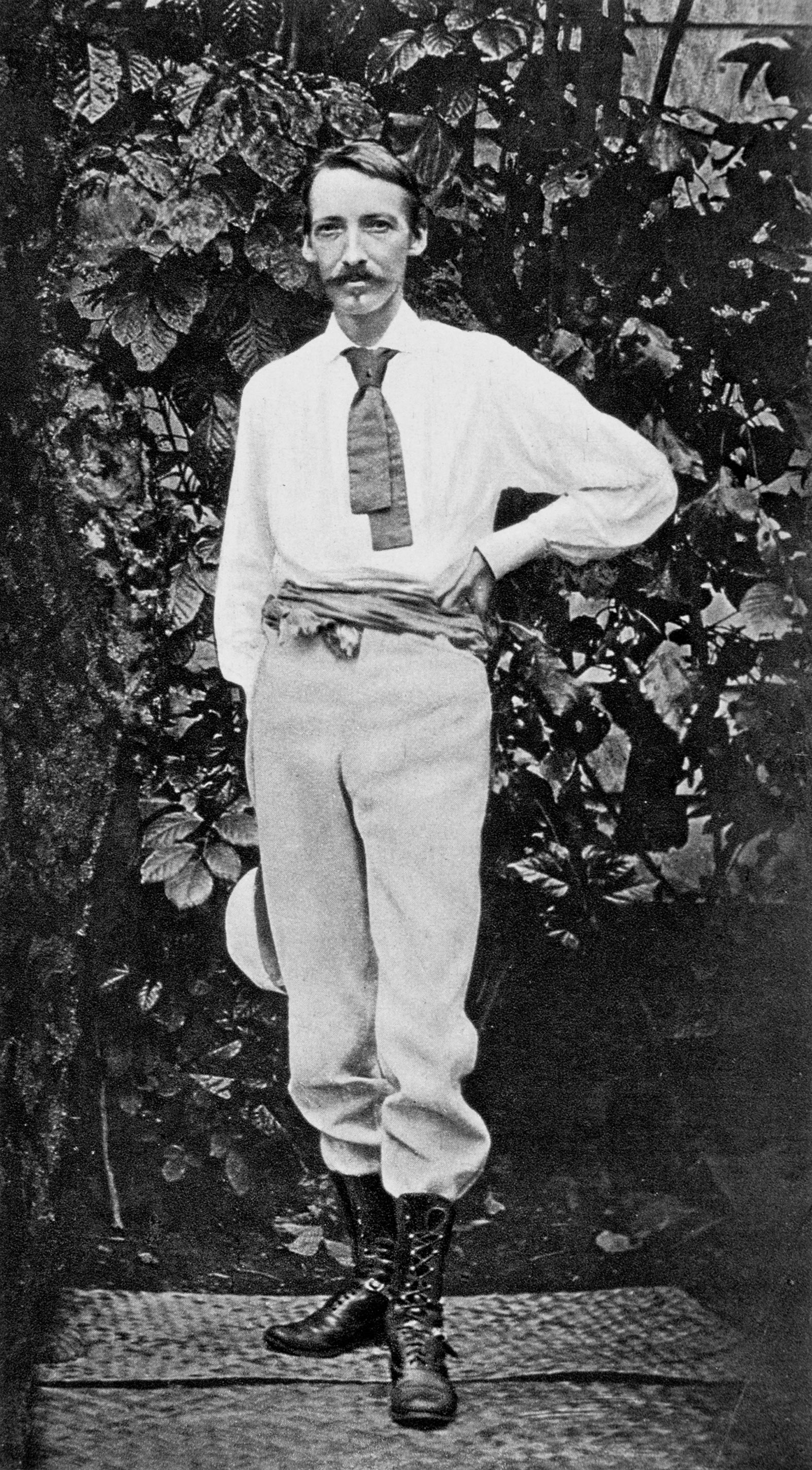
AlamyRobert Louis Stevenson, Vailima, Samoa, 1894

Known today as a writer of adventure stories for youth (Treasure Island, Kidnapped) or for his horror classic The Strange Case of Dr. Jekyll and Mr. Hyde, or even for his light-poetry collection A Child’s Garden of Verses, in his day Robert Louis Stevenson was celebrated equally for his essays. He wrote more than a hundred, of which seventy might be classified as personal. Edmund Gosse argued that these personal essays “reveal him in his best character” and that “if Stevenson is not the most exquisite of the English essayists, we know not to whom that praise is due.” Richard Le Gallienne predicted that “Stevenson’s final fame will be that of an essayist.” Once upon a time his essays were routinely offered as models in American college composition courses. Selections of them—from William Lyon Phelps’s Essays of Robert Louis Stevenson (1906) to The Lantern-Bearers and Other Essays(1988), astutely assembled by Jeremy Treglown—have sought to champion his excellence in the genre.

It has not been an easy sell. In part that may be because essays have never commanded the interest or respect that fiction has, but it may also be because the reading public has resisted relinquishing its settled idea about Stevenson as a romantic fantasist. Now Trenton B. Olsen, an associate professor of English at Brigham Young University, has pulled together the most copious selection so far, reproducing not only Stevenson’s dozen or so celebrated essays but also his uncollected published essays and his undergraduate ones. All this gives us the chance to assess the range and stature of a writer who, according to Olsen, was in his day “considered the most successful essayist of his generation.”

Stevenson was born in 1850 in Edinburgh, Scotland, into a distinguished family of lighthouse engineers. His father, Thomas Stevenson, had invented an ocular device for lighthouses and hoped that his son would go into the family business. But Robert showed little interest in engineering, cutting classes at the University of Edinburgh, and tempered his truancy only when his father coerced him to pursue a law degree instead. In one of his most famous essays, “An Apology for Idlers,” Stevenson cheekily argued for “certain other odds and ends that I came by in the open street while I was playing truant…. Suffice it to say this: if a lad does not learn in the streets, it is because he has no faculty of learning.”

Rebelling against his Scottish Calvinist upbringing, with its narrow emphasis on “respectability” (a word he always wrote with a sneer), and turning away from his family’s religious convictions (to his devout father’s deep sorrow), Stevenson asserted that “there is no duty we so much underrate as the duty of being happy.” He took to dressing bohemian, drinking, and visiting brothels. In fact he was hardly idle, insofar as he spent every available moment trying to master his preferred vocation, literature:

All through my boyhood and youth, I was known and pointed out for the pattern of an idler; and yet I was always busy on my own private end, which was to learn to write. I kept always two books in my pocket, one to read, one to write in. As I walked, my mind was busy fitting what I saw with appropriate words; when I sat by the roadside, I would either read, or a pencil and a penny version-book would be in my hand, to note down the features of the scene or commemorate some halting stanzas. Thus I lived with words. And what I thus wrote was for no ulterior use, it was written consciously for practice.

Such a beautiful description of a young author-to-be’s dedication. But wait, there’s more: “I have thus played the sedulous ape to Hazlitt, to Lamb, to Wordsworth, to Sir Thomas Browne, to Defoe, to Hawthorne, to Montaigne, to Baudelaire, and to Obermann.” (Notice the proliferation of personal essayists in his list of models.) He catches himself—“I hear some one cry out: But this is not the way to be original!”—then declares that imitation is the royal road to originality, citing Montaigne’s drawing on Cicero. “It is only from a school,” Stevenson says, “that we can expect to have good writers.”

At a time when the English essay had gravitated toward the more formal, intellectual, stately prose of Thomas Carlyle, Matthew Arnold, John Ruskin, and Walter Pater, Stevenson chose to attach himself to the older, more informal school of William Hazlitt and Charles Lamb. He took up many of the personal essay’s standard themes, such as friendship, talk, walking around, elderly relations, childhood, the past, and everyday objects. (See his playful essay “The Philosophy of Umbrellas.”) He was particularly enamored of Hazlitt, insisting that “though we are mighty fine fellows nowadays, we cannot write like Hazlitt.” In his essay “Walking Tours” he cited Hazlitt’s “On Going a Journey” as being “so good that there should be a tax levied on all who have not read it.”

Stevenson’s own essays are more genial than those of the combative, truculent Hazlitt, but he took from the older writer a liking for energetic, rhythmic prose. He even toyed with the idea of writing a biography of Hazlitt, then gave up the project in dismay when he came across Liber Amoris, the astonishingly frank account Hazlitt wrote of his unrequited infatuation with an innkeeper’s daughter. (There was a prim, Victorian avoidance of sex in Stevenson’s writing, despite his appetite for experience.)

One motivation that kept him seeking adventures was his ill health, a pulmonary weakness he had suffered ever since he was a boy. Few writers have been as consistently aware of encroaching mortality as Stevenson, and he tried to cheat death or at least stay one step ahead of it, cramming as much living as he could into his brief forty-four years. “It is better to lose health like a spendthrift than to waste it like a miser,” he wrote. As the biographer-critic Treglown succinctly put it:

He had always wanted to escape from the certitudes and complacencies, religious, moral and social, of his Edinburgh upbringing, and had been helped in doing so by the travelling his poor health necessitated. Visits to foreign spas were not only desirable, but required.

The title of one essay, “Ordered South,” says it all.

He wrote about hanging out with the Barbizon painters in Fontainebleau, exploring the mountains around the sanatorium in Davos, frequenting the Latin Quarter in Paris. He freely dispensed advice about the art of life—polemics that must be read as reflections of a semi-invalid for whom existence itself was never to be taken for granted. His Thoreauvian preference for enjoying the outdoors instead of being buried in an office can get annoying, especially to those of us who must submit to the daily grind because we haven’t had the advantage of parents who foot the bills. He admitted that his privilege often made him uneasy. Referring to himself in the third person, he wrote:

Some time after this, falling into ill health, he was sent at great expense to a more favourable climate; and then I think his perplexities were thickest. When he thought of all the other young men of singular promise, upright, good, the prop of families, who must remain at home to die and with all their possibilities be lost to life and mankind; and how he, by one more unmerited favour, was chosen out from all these others to survive; he felt as if there were no life, no labour, no devotion of soul and body, that could repay and justify these partialities.

As a young man Stevenson even declared himself a socialist, and though he gave up that political affiliation, he continued to brood about the fate of the poor. In time he would join them, reluctant to keep accepting money from his father and forced to eke out an impecunious living with freelance newspaper pieces. He was especially hard up on his travels through the United States. Having idealized America as a land of democracy and egalitarianism, greatly admiring Whitman’s brief for the common man, in 1879 he set off ill-advisedly across the continent only to have his illusions uprooted by the cupidity he encountered, arriving in San Francisco an emaciated scarecrow. (The trip is described sardonically in his book-length account, The Amateur Emigrant.)

He was crossing the United States to join his intended fiancée, Fanny Osbourne, with whom he had fallen in love on earlier travels. Osbourne was American, ten years his senior, the mother of three children (one of whom had died from tuberculosis), and soon to be divorced from her philandering husband. When they married in 1880, Stevenson found himself the head of a household with steep financial responsibilities, and he could no longer play at being a young man on the loose. In a deliciously witty essay, “A Letter to a Young Gentleman Who Proposes to Embrace the Career of Art,” he warned, “Weed your mind at the outset of all desire of money…. If a man be not frugal, he has no business in the arts.”

His altered domestic situation inevitably affected the subjects of his essays. In a series titled “Virginibus Puerisque,” he wrote trenchantly about women, love, and wedlock. Taking issue with Victorians putting women on a pedestal, he wrote:

That doctrine of the excellence of women, however chivalrous, is cowardly as well as false. It is better to face the fact, and know, when you marry, that you take into your life a creature of equal, if of unlike, frailties; whose weak human heart beats no more tunefully than yours.

Stevenson biographers are divided between those who regard Osbourne as a saintly supporter of the writer and those who claim that her hypochondria, hostility to some of his friends, and mental breakdowns made for endless complications. Regardless, the flowering of Stevenson’s fiction-writing gifts seemed to depend on the stability of his marriage.

A family man, by 1883 he had finally succeeded in becoming a popular novelist. As he stated with rueful candor in his essay “My First Book: Treasure Island”:

It was far indeed from being my first book, for I am not a novelist alone. But I am well aware that my paymaster, the Great Public, regards what else I have written with indifference, if not aversion…. I was thirty-one. By that time, I had written little books and little essays and short stories; and had got patted on the back and paid for them—though not enough to live upon.

That changed with Dr. Jekyll and Mr. Hyde, which made him world-famous. For this classic tale of the divided self, Stevenson claimed in his essay “A Chapter on Dreams,” he drew on the forces of the unconscious, which he called “the Brownies” (a Scottish term for a household fairy):

That part which is done while I am sleeping is the Brownies’ part beyond contention; but that which is done when I am up and about is by no means necessarily mine, since all goes to show the Brownies have a hand in it even then.

Might not the two halves of his sensibility also be seen as representing the fiction writer, exploring half-hidden impulses of desire, and the more rational-sounding essayist?

In the meantime, his essays had deepened and grown more complex. “The Lantern-Bearers” (1888), arguably his greatest essay, begins with a recollection of the “easterly fisher village” where Stevenson spent his vacations as a child:

The place was created seemingly on purpose for the diversion of young gentlemen. A street or two of houses, mostly red and many of them tiled; a number of fine trees clustered about the manse and the kirkyard, and turning the chief street into a shady alley; many little gardens more than usually bright with flowers; nets a-drying, and fisher-wives scolding in the backward parts; a smell of fish, a genial smell of seaweed; whiffs of blowing sand at the street-corners; shops with golf-balls and bottled lollipops; another shop with penny pickwicks (that remarkable cigar) and the London Journal, dear to me for its startling pictures, and a few novels, dear for their suggestive names: such, as well as memory serves me, were the ingredients of the town.

This leisurely opening showcases the finesse of a novelist, employing all five senses. The description of the village continues in rich detail, summoning the pleasures of memory, until, suddenly, we get a jolt, issuing from the gothic side of Stevenson:

There are mingled some dismal memories with so many that were joyous. Of the fisher-wife, for instance, who had cut her throat at Canty Bay; and of how I ran with the other children to the top of the Quadrant, and beheld a posse of silent people escorting a cart, and on the cart, bound in a chair, her throat bandaged, and the bandage all bloody—horror!—the fisher-wife herself, who continued thenceforth to hag-ride my thoughts, and even today (as I recall the scene) darkens daylight.

But all this is preamble: “What my memory dwells upon the most, I have been all this while withholding.” It was the boys’ felicitous practice of carrying lanterns hidden inside their coats:

The essence of this bliss was to walk by yourself in the black night, the slide shut, the top-coat buttoned; not a ray escaping, whether to conduct your footsteps or to make your glory public: a mere pillar of darkness in the dark; and all the while, deep down in the privacy of your fool’s heart, to know you had a bull’s-eye at your belt, and to exult and sing over the knowledge.

Stevenson is here on comfortable ground, celebrating with fondness the knightly bravery of boyhood.

From there he makes a radical shift as he contemplates various adult figures like the miser, whose outward form seems wretched but whose inner life may be teeming with secret joy, or others

who are meat salesmen to the external eye, and possibly to themselves are Shakespeares, Napoleons, or Beethovens; who have not one virtue to rub against another in the field of active life, and yet perhaps, in the life of contemplation, sit with the saints.

The hidden lantern is metaphorically transferred to the inner life of seemingly nondescript citizens, whose imaginative resources we would do well not to misjudge or dismiss too quickly.

Then it is but a brief step to Stevenson’s attack on the realist school of fiction writers, led by Émile Zola, with its emphasis on “cheap desires and cheap fears,” on “that meat market of middle-aged sensuality” and “on life’s dulness and man’s meanness,” which to his mind is “a loud profession of incompetence.” For “the true realism, always and everywhere, is that of the poets: to find out where joy resides, and give it a voice far beyond singing.”

One needn’t agree about Zola to admire the panache with which Stevenson protects a space for the imagination, for dreaming and innocence, associated, characteristically for him, with boyhood. The author of such swashbuckling tales as The Master of Ballantrae and The Black Arrow was defending not only his own work but the whole Romantic school of novelists, and fantasy in general. In his essay “A Humble Remonstrance,” Stevenson took exception to Henry James’s insistence that fiction must draw its inspiration from life, saying that life was too ragged, complicated, and random to serve as a proper model for literary art.

“For to miss the joy is to miss all,” asserts “The Lantern-Bearers.” Stevenson traveled the world over, looking for experiences that might offer him alternatives to his Edinburgh upbringing. He remained intensely loyal, though, to Scottish history, dreaming up plots about the courage of his ancestors. In the end he and his wife and stepson, Lloyd, settled in Samoa, the final destination in his quest for health. He built an estate there, Vailima, and became a revered member of the community, who called him the Writer of Stories. He gathered folktales and took historical and anthropological notes, which were published in newspaper accounts during his lifetime and ultimately gathered in his engrossing posthumous book In the South Seas. He who had once declared it the mission of the writer “to protect the oppressed and to defend the truth” wrote an impassioned brief for the islanders, A Footnote to History, which castigated the colonial powers—England, France, the United States, and Germany—for exploiting them and destroying their way of life.

It is customary for literary critics to argue that Stevenson, in his Samoan years, turned away from the writing of romances and converted to realism. Certainly he needed specific facts to bolster his descriptions of the islanders, especially as he was writing a sympathetic account on their behalf. And his last fictional effort, Weir of Hermiston, which remained unfinished at the time of his death of a brain hemorrhage in 1894, does seem closer than he ever came to psychological realism. On the other hand, the many essays he had been writing for years had trained him in a flexible style that could well be considered realistic, regardless of their defense of Romanticism.

What are we to make, finally, of his contribution to the essay form and of the popular neglect of that body of work? Stevenson, worshiping at the altar of literature, polished every word and page in his essays. His Victorian prose style is highly wrought and impeccably smooth, with long, elegantly turned sentences embedded in lengthy paragraphs, and a sprinkling of Latin, all of which dates him, alas. He was much admired by Henry James and Joseph Conrad, and Jorge Luis Borges considered him one of the masters of English prose. Though Max Beerbohm greatly admired his stories, he found Stevenson’s essayistic prose “too much given to manner in literature” and “over-fond of unusual words and peculiar cadences.”

In his day, despite Beerbohm’s objection, Stevenson was the most user-friendly of writers, but his packed paragraphs require a diligent attentiveness that contemporary readers, fed on shorter, more direct sentences, may find taxing. Under Ruskin’s influence, he wrote knowingly enough about flora and fauna to qualify as a nature writer, though sometimes he would overdo the landscape descriptions. He himself noted, “No human being ever spoke of scenery for above two minutes at a time, which makes me suspect we hear too much of it in literature.”

However we might choose to rate him, we can situate him as the bridge between the early-nineteenth-century giants, Lamb and Hazlitt, and later practitioners of the personal essay such as Beerbohm, Virginia Woolf, G.K. Chesterton, and George Orwell. His sensibility is not skeptically protomodernist, like Montaigne’s; he is solidly old-school, with a sweetness, kindness, charity, wisdom, and tact that must be appreciated for what they are.

Every writer, Stevenson said, “should recognise from the first that he has only one tool in his workshop, and that tool is sympathy.” He exercised his powers of sympathy and detachment extensively in his literary criticism, and it is a pity that some of these essays, like “A Humble Remonstrance” and “The Gospel According to Walt Whitman” (one of the best things ever written about the poet), could not be included in Olsen’s collection, as they were not deemed personal essays. Having championed the personal essay as a distinct subgenre in years past, I have come to appreciate just how blurry is the line between personal and critical essays: Woolf, Orwell, Beerbohm, James Baldwin, and Susan Sontag, as well as Stevenson, all wrote both, and their personalities shone as brightly in one form as in the other. Were a complete volume of his critical essays put together, we would be even better positioned to evaluate Stevenson.

As for the “personal” part of the equation, Stevenson, though keenly self-aware, did not seem particularly inclined to reveal his neurotic quirks and eccentricities the way Lamb or Hazlitt did. We learn the rudiments of his life story from his essays, but there is a sense of propriety that forbids further intimacy. Besides, the invalid existence he led made him more curious about the people he met than about himself; many of his essays are portraits of others. “It is salutary,” he wrote in his essay “An Autumn Effect,” “to get out of ourselves, and see people living together in perfect unconsciousness of our existence, as they will live when we are gone.”

The figure he cuts in these essays is that of a sane, intelligent, compassionate, observant, and good-humored man, eager to act morally but unsure that he will ever be able to. He thought a proper epitaph should read, “Here lies one who meant well, tried a little, failed much.” Essays as a general rule are exploratory and do not invite perfection, but his humble assertion should be balanced by the statement of The Cambridge History of English Literature(1916) that he was “the foremost essayist since Lamb.” In any case let us be grateful for Olsen’s collection, which offers more than enough evidence of this profoundly likable practitioner’s achievements in the essay form.

Friday, August 2, 2024

Politico Deep Dive Project 2025


The Friday Read


It Was Supposed to Be Trump’s Administration in Waiting. But Project 2025 Was a Mirage All Along.

The inside story of how Project 2025 fell apart.


Paul Dans is pictured in front of a Heritage Foundation sign.

Paul Dans, director of The Heritage Foundation's 2025 Presidential Transition Project is pictured at the Heritage Foundation headquarters on June 7. | Photos by Francis Chung/POLITICO


By Ian Ward


08/02/2024 05:00 AM EDT


Ian Ward is a reporter at POLITICO.


On a Thursday morning in early June, I hopped off a train at Washington’s Union Station and walked a few blocks east to get a glimpse into the headquarters of one of the most secretive — and most hyped — organizations in America: Project 2025, tucked away inside the main offices of the Heritage Foundation on Capitol Hill.


My visit came at an opportune moment: For months, journalists and liberal watchdog groups had been poring over Project 2025’s 900-page policy book — titled “Mandate for Leadership: The Conservative Promise” — which purports to be a “comprehensive policy guide” for the next Republican administration, including recommendations to restrict access to medical abortion, remove civil service protections for some federal workers and banning pornography. If you’ve heard a Democrat talking apocalyptically about Project 2025 in the past few months, this document is probably what they have in mind.


I was there to spend two days shadowing the project’s leadership, focusing on the lesser-known aspects of the project’s four-part plan. In addition to the policy book, Project 2025 was also building a “conservative LinkedIn” — a database of fully vetted candidates who could fill jobs across future Republican administrations — and an online “training academy” to give job-seekers the ideological and practical chops to make the entire federal bureaucracy match Trump’s MAGA ambitions. (Project 2025’s final part, known as “Pillar IV,” involves the creation of an “180-day playbook” for implementing the policy agenda — but the playbook would be kept confidential.)


Project 2025 flyers, a Project 2025 mug, copies of the Project 2025 Mandate for Leadership, a copy of the 2020 Mandate, and other items are seen at Heritage Foundation headquarters.

Project 2025 flyers, a Project 2025 mug, copies of the Project 2025 Mandate for Leadership, a copy of the 2020 Mandate and other items are seen at Heritage Foundation headquarters.


I was met in the foundation’s marble-lined lobby by Ellie Keenan, a smiley communications staffer who was to serve as my handler. She got me a security pass, showed me to a nearby elevator and pressed the button for the sixth floor. We were headed straight to the nerve center of what The Wall Street Journal dubbed “the radical conservative plan to reshape America.”


The elevator doors opened onto a narrow hallway, which I walked down expecting to be greeted by a buzz of activity. Instead, I entered a silent, low-ceilinged room, filled by four empty cubicles, a copy machine and an empty desk covered in cardboard boxes and stray copies of the policy book. A half-eaten box of granola bars and a jar of candy on a nearby windowsill were the only signs that human beings occasionally occupied the space. Keenan gestured toward two adjacent offices belonging to two of the project’s seven full-time staffers.


This, I wondered, is it?


A mission statement is seen in an elevator (top); a person is seen in a hallway at Heritage Foundation headquarters.

Reporter Ian Ward entered the Heritage Foundation headquarters in June. "What I found was a low-budget operation, beset by internal dysfunction, political miscalculation and questionable leadership," he writes.


Over the course of my visit, I came to see that the emptiness of the Project 2025 offices at Heritage headquarters was a good metaphor for the project as whole. On both the left and the right, Project 2025 had been portrayed as a vast and well-orchestrated operation — either to rationalize and systematize Trumpism, according to some conservatives, or to undermine democracy and implement an ultra-disciplined reactionary regime, according to some liberals.


Instead, what I discovered — during my visit and in my conversations with conservatives involved in the project — was a shoestring operation struggling with internal disagreements, political miscalculation and questionable leadership. Project 2025 had set out to turn Trumpism into a well-oiled machine; instead, it had created an engine of the same sort of political disorder that defined the first Trump White House.


Shortly after my visit, the signs of that disorder became visible to the world beyond the Heritage headquarters. In early July, the week before the Republican National Convention, former President Donald Trump — sensing the political liability that Project 2025 had become — took to social media to distance himself from the group, claiming (falsely, I learned) to “know nothing about Project 2025” and that he had “no idea who is behind it.” Three weeks later, on July 30, Heritage announced that the project’s director, Paul Dans, was stepping down amid increased pressure from the Trump campaign. Project 2025 will continue in a pared-down form under the leadership of Heritage President Kevin Roberts, but its relationship with Trump’s team appears to be seriously damaged.


Which isn’t to say that it will carry no influence with the next Trump administration. Dans may be gone, but the policy book will still be out there ready to be adopted, and the project can still turn over its personnel database and “180-day playbook” to Trump’s transition team. Many of the people who have been closely involved in the project — including Russell Vought, who is leading the work on Pillar IV, and Johnny McEntee, a former top aide to Trump — are likely to hold senior positions in the next Trump White House, and Trump’s vice presidential pick JD Vance remains close with Roberts, having authored the foreword to his new book. Out of sheer necessity, the Trump transition team may end up relying on the project’s resources, especially its personnel database, given Trump’s stated ambition to “dismantle the deep state” and replace it with conservative loyalists.


Kevin Roberts and JD Vance converse while sitting in an audience.

Heritage Foundation President Kevin Roberts and Sen. JD Vance converse before a panel discussion on regime change and the future of liberalism at Catholic University on May 17, 2023.


But in the end, it may have been Heritage’s self-generated hype — which at times exaggerated Project 2025’s scope and overlooked internal fissures — that led to its sidelining.


Now, the escalating kerfuffle that culminated in Dans’ departure chips away at the sense of professionalization and newfound competence that both Project 2025 and the Trump campaign have been trying to convey about the next Trump administration. The former president and his allies may want to project the illusion of discipline, but the movement that fuels Trumpism still runs on chaos — and Project 2025 is no exception.


As things began to unravel in full public view, I thought back to an exchange that I’d had with Dans during my visit to Project 2025 headquarters in June. I had asked Dans how confident he was that, if Trump won in November, his transition and his administration would use the resources that Project 2025 had put together. His answer was entirely self-assured.


“We talk to President Trump, and we also talk to his team,” Dans told me. “The reality is that we have a great complement of people here that are extremely effective and who were in the prior administration, and we have a hundred [allied] organizations with thousands of people at work. You can’t help but not use this work.”


Dans may have been telling the truth about Heritage’s relationship with Trump, but he was overstating the extent of what his team had to offer. With Dans gone, Trump and his team may still rely on Project 2025 if they win in November — but they may be disappointed with what they find when they take a deeper look.


Paul Dans gives an interview in his office.

Paul Dans stepped down on July 30, 2024, amid increased pressure from the Trump campaign.


To hear Dans tell it, the motivations behind Project 2025 were a mix of the cinematic and the heroic.


“We kind of envision this project — as they do in Hollywood when they’re pitching a project — as the Manhattan Project meets the Empire State Building meets D-Day,” Dans said when I met him with in his office. A tall, broad-shouldered man with dark hair and a prominent chin, Dans has a habit of flitting back and forth between partisan red meat and folksy metaphorizing, and he has a knack for (almost) reciting famous quotations and aphorisms from memory.


On the second day of my visit, he was feeling especially grandiloquent: From the example of the Manhattan Project, he told me, his team derived the desire to “bring together the best and brightest to solve an existential crisis”; from the construction of the Empire State Building, the inspiration to build something that once seemed impossible; from D-Day, “the courage that they had … to get over the fear of the unknown.”


“We took our inspiration from Daniel Burnham, who is the great architect of the City Beautiful Movement,” he continued, reaching for one of his famous quotations. “‘Make no little plans. They have — they lack — the power to, you know, to inspire men — they lack that magic — but they also aren’t gonna get realized.’” (Close enough.)


Paul Dans wears a cufflink with the Seal of the President of the United States.

Dans wears a cufflink with the Seal of the President of the United States.


Dans was a reasonably safe choice to lead the project. A commercial litigator by training, Dans joined Trump’s Department of Housing and Urban Development in 2019 before entering the U.S. Office of Personnel Management in February 2020, where — along with McEntee, Trump’s body man-turned-director of White House Office of Personnel Management — he waged a late-stage crusade to purge the administration of any disloyal elements, earning him a reputation as a committed Trump loyalist.


In April 2022, Roberts tapped Dans to oversee Heritage’s “2025 Presidential Transition Project” — or Project 2025, for short. At Heritage, he quickly moved to reconstruct what he called “the HUD mafia,” a core group of young and hyper-loyal advisers who had left that department to oversee personnel late in the Trump administration. Two of McEntee’s top aides — Spencer Chretien and James Bacon — both joined shortly thereafter, and McEntee came on in May 2023 as a senior adviser. A few months later, Dans poached another former McEntee aide, Troup Hemenway, from Heritage’s top rival in Washington’s MAGA universe, the America First Policy Institute’s “America First Transition Project,” sealing Project 2025’s reputation in conservative circles as the institutional home for Trump’s young and loyal coterie of personnel staffers.


One year later, in April 2023, Heritage published the 900-page “Mandate for Leadership.” This wasn’t an earth-shattering development by itself: Heritage has published policy manuals in elections years stretching back to Ronald Reagan’s run in 1980. But Heritage signaled that its ambitions for the project were more sweeping than in years past, announcing that it had gathered a coalition of over 50 conservative organizations to serve on the project’s advisory board, whose members had agreed to contribute to the project’s other pillars on a volunteer basis. (The coalition has now expanded to over 110 members.)


Clockwise from top left: Spencer Chretien speaks in his office at Heritage Foundation headquarters; James Bacon talks to fairgoers at the Iowa State Fair; Troup Hemenway speaks during a Project 2025 Advisory Board meeting; John McEntee walks to board Air Force One.

Fundamental disagreements have been simmering below the surface of Heritage’s coalition. | Francis Chung/POLITICO, Charlie Neibergall/AP; Francis Chung/POLITICO; Saul Loeb/AFP via Getty Images


Yet the focus on building a united front around the project obscured fundamental disagreements simmering below the surface of Heritage’s coalition. In November 2022, Heritage hired Rick Dearborn, the executive director of Trump’s first transition team in 2016 who later served as White House deputy chief of staff, as a fellow advising the project. Dans then tasked Dearborn with writing the chapter about the White House Office, the innermost sanctum of the West Wing that’s led by the White House chief of staff and includes the president’s closest advisers.


To some of the people on the project’s advisory board, though, the elevation of Dearborn — who served in the White House for just over a year during the chaotic early days of the Trump presidency, and who many in the administration thought was responsible for the failures of the first transition team — severely undercut the project’s credibility. “It was essentially like asking an amputee sitting at home who’s never driven a car to comment on Formula One,” said a conservative who advised the project. “I thought this was a real thing, but Dearborn is drafting the section on [the White House Office]?”


Similar complaints were raised privately among some of the project’s partners about the inclusion of Steven Bradbury — one of the authors of the George W. Bush administration’s infamous legal memoranda authorizing the use of torture methods during the War on Terror — who wrote the Mandate’s chapter on the Department of Transportation, according to the adviser. (Bradbury served as the general counsel and later acting director of the Department of Transportation during the Trump administration.)


A spokesperson for Project 2025 rejected the idea that there had been complaints about either hire. “We’re not interested in anonymous pot shots from people who may or may not even have served on the transition.”


“How can we review a several-thousand-word document in an hour and make any substantive changes?”


More recently, members of the coalition have started to raise questions about Dans’ and Roberts’ stewardship of the project — and especially martial rhetoric that the two men have used to describe the project’s work. (Dans has termed the policy book a “battle plan” for the next administration, while Roberts has said that the country is in the middle of a “second American revolution” that will be “bloodless … if the left allows it to be.”)


In a speech at the National Conservatism Conference in Washington in July — where Dans also spoke about Project 2025 — the conservative economist Oren Cass, who contributed to Mandate’s chapter on the Department of Labor, indirectly chastised Roberts for his rhetoric, arguing that it undercut the project’s substantive policy goals. “Gaining productive power requires focusing on people’s problems and explaining how you are going to solve them, not pounding the table for Christian Nationalism or a second American revolution,” Cass said in his speech. (He declined a request to elaborate on his criticisms.)


In other instances, people involved with the project heard Dans talk about “keeping the cucks out” of the next administration or embracing a style of politics that “isn’t your grandpa’s conservatism.”


A copy of the Project 2025 Mandate for Leadership is seen with other books and items on a bookshelf at Heritage Foundation headquarters.

A copy of the Project 2025 Mandate for Leadership (right) is pictured on a bookshelf at the headquarters. Heritage traditionally does not publish its mandate until the summer before the election, but Project 2025 leadership moved up the publication date.


Even the policy book itself became a subject of controversy within parts of the coalition. Although Project 2025 claimed to be agnostic about which of the Republican primary candidates would claim the nomination, Trump loyalists suspected early in the drafting process that Roberts was throwing Heritage’s institutional weight behind Florida Gov. Ron DeSantis. And while Roberts has since warmed to Trump, some people wondered whether his support for DeSantis informed the strategy behind the policy book — making it less tailored to a Trump nomination. “There were a lot of things in [the book] that were drafted potentially with DeSantis in mind,” said the adviser.


The frustrations extended through the drafting process and the roll-out. In at least one case, the project’s leadership asked for advisers’ input on a late-stage draft of one of the book’s chapters with less than two hours before the final publication deadline, according to a person involved. “So many people complained” about the quick turn-around, the person said. “How can we review a several-thousand-word document in an hour and make any substantive changes?” (A spokesperson for Heritage denied this account.)


The more fundamental disagreement, however, pertained to the question of whether Heritage should hold off on publishing the policy book until closer to the election, or whether it should consider not publishing it publicly at all. Internally, the project’s leadership took for granted that its policy recommendations would be public, pointing to the foundation’s long history of publishing a new edition of the Mandate during election years, dating back to 1980. Although Heritage had traditionally not published its Mandate until the summer before the election, the Project 2025 leadership had decided to move up the publication date to publicize its recommendations and preempt any future transition efforts.


But privately, some of the project’s partners wondered whether publishing the book so early — and promoting it so aggressively — would give Democrats unnecessary political ammunition and afford their opponents more time to devise legal strategies to counter conservatives’ plans.


“Was the goal to blueprint the Trump administration, or was the goal to increase the clout and power of the Heritage Foundation?”


“If you genuinely believe that there is like a powerful deep state that is inclined to work adverse to conservative interests or to harm average Americans, then you would think it would be a little bit more discreet and a little more careful,” the person said. “If you think you’re in occupied France and the Vichy regime and the Nazis are out to get you, then you would act like a real resistance. You wouldn’t publish Charles de Gaulle’s travel timetable for everyone to read.”


Over time, those fears have come true. On the campaign trail, Democrats have moved aggressively to tie Trump to the Project 2025 agenda, and House Democrats and other liberal groups have launched task forces to combat future efforts to enact the project’s recommendations. In the end, the episode left some involved with the project wondering whether Project 2025 had always been an elaborate vanity project for Heritage.


“What was the goal of all this?” said another person with direct knowledge of the project. “Was the goal to blueprint the Trump administration, or was the goal to increase the clout and power of the Heritage Foundation?”


Spencer Chretien, facing the camera, speaks with a reporter in his office while a communications staffer works on her laptop.

Spencer Chretien (center), associate director of the Heritage Foundation's 2025 Presidential Transition Project, told Ward that even if Trump lost, the organization's database could serve as a resource for the conservative movement for decades to come.


Chretien turned around his computer monitor to reveal his profile on Project 2025’s most cherished resource. The personnel database, Chretien told me, was a significant part of what distinguished Project 2025 from Heritage’s past transition efforts: The thi