Wednesday, June 19, 2024

Thrust: Album reviews ProgArchives


HERBIE HANCOCK Thrust reviews

Herbie Hancock Thrust album cover

Collaborators/Experts Reviews

Review by Sean Trane
SPECIAL COLLABORATOR Prog Folk
4 stars
The logical musical continuity of Head Hunters still featuring The Headhunters (now a group), Thrust comes back with a better (IMHO, although I'm likely to be in a minority) album than HH with a slightly different line up, bringing Mike Clark (a white dude to be found later in Brand X as Collins' replacement) to replace session drummer Harvey Mason. Whether Thrust came before or after Headhunter's space funk album, is not clear to me, but I find this one more interesting; not because of the return of Springett on the artwork (actually I find it a little too pretentious), but because it tries to be more accessible and listener-friendly.

Starting the same way HH did, but this time with the drummer instead of bassist Jackson, then having Summers intervening with all kinds of percussion instruments, Hancock is again using his clavinet to simulate the funky guitar. The 10-mins+ Palm Grease is an arrangement of a funk rhythm that Clark and Jackson had found at a concert warm up. Actual Proof is much calmer and not nearly as loud and Hancock borders dissonance in his improvisation, pushed as far as he could by his rhythm section.

The flipside starts on the Maupin/Hancock composition, but it sounds as if they'd encountered Brian Auger's Oblivion Express on their path. The 11-mins Butterfly is a real joy to listen to especially when Maupin his wide array of wind instruments at the forefront. The closing ultra-funk Spank-A-Lee is another rhythm found by Clark, Jackson and Summers and it's by far the loudest track on the album

Strangely enough, Thrust climbed to the same #13 spot on the Billboard and sold quite a bit, but it fails to get the recognition of HH, even though it's probably more listener-friendly.

Review by Chicapah
PROG REVIEWER
4 stars
After anteing up for the high-stakes jazz rock/fusion poker game that was being played in the mid 70s with their impressive "Headhunters" LP, Herbie Hancock and his ultra-talented cohorts proceeded to boldly raise the stakes by releasing this splendid album right on its heels. While the original lineup of the Mahavishnu Orchestra was folding, Weather Report was investigating the spacier, more esoteric angles of the genre and Return To Forever was busy blending hard rock ingredients with jazzed-up spices, Herbie & Co. were intent on stretching the boundaries of progressive funk to its limits. HH is quoted as saying "Rather than work with jazz musicians that could play funk, I worked with funk musicians that could play jazz." Makes sense to me. The result is "Thrust," a fantastic quartet of songs that never fail to entertain and amaze.

"Palm Grease" starts things off with drummer Mike Clark laying down a basic pattern before the whole band saunters in one at a time to build the funkhouse brick by brick. Bill Summers' exciting percussion provides a quick break, then the group goes right back to work like skilled carpenters. After a key change Bennie Maupin puts a wah-wah effect on his tenor saxophone while Hancock displays his expertise on the electric piano. The whole piece is more in the vein of "an exploration of the groove" than a virtuoso showcase and it's incredibly cohesive. The synthesized strings that roll in over the finale allow for a psychedelic exit.

"Actual Proof" begins with the funk monster running at a torrid pace underneath a somewhat leisurely alto flute/synth melody line but then evolves into an intense trio of drums, bass and electric piano. The rhythm section of Clark and bassist Paul Jackson is unreal as they sizzle like frying bacon below Herbie's hot electric piano ride and together they play as if they're triplets joined at the hip. This is one fervent throw-down, my friends. Finally Maupin's flute floats in to lighten things up and to keep things from ending in a tragic occurrence of spontaneous combustion.

The aptly named "Butterfly" is a welcome change of pace at this point. It floats like a. well, you know as Bennie's deep (and so fine) bass clarinet creates the beautiful melody that sings over the hypnotic, pulsating beat. He then delivers an exquisite soprano sax ride followed by Hancock's sly Rhodes piano and tasteful synthesizers. Before you realize it, though, the stealthy rhythm section escalates the number into double-time briefly before they all return to the original feel and reprise the soothing melody. It's a remarkable tune and my favorite cut on the album.

"Spank-A-Lee" wakes you up like a rude slap in the face as its furious tempo sets the mood for a prog funkathon that's hotter than Hades. They don't leave anything in the tank on this blistering track as Maupin's tenor saxophone blazes away over the Clark/Jackson inferno roiling below. Herbie and Bill do their best to keep things from flying asunder but you can tell that they're being relentlessly sucked into the cyclone like swimmers caught in a rip tide. Eventually the band eases off the gas to throttle down with some cool accents and kicks before gracefully landing the mother ship softly back on terra firma. This is one roller coaster ride that's not for the elderly or squeamish.

This assemblage of four extended tracks is a primo example of top-notch instrumental progressive music. For those who have yet to delve into the sometimes dizzying but exhilarating world of jazz rock/fusion (with a heavy dose of funk in this case) I don't hesitate to say that this album and its predecessor would be a wonderful place to begin. These proggers weren't fooling around. 4.2 stars.

Review by Easy Money
SPECIAL COLLABORATOR Honorary Collaborator / Retired Admin
5 stars
Some albums so transcend their genre that to include them with others of their genre almost seems like an insult. Would you say that Made in Japan is just another hard rock album, that Master of Puppets is just another metal album, or that White Light White Heat is just a low-fi garage rock album. Such is the case with Herbie Hancock's Thrust, this is what most would label funk-jazz, but you will not find another funk jazz album like this, not by Herbie, not by anyone.

The level of sophisticated syncopation and inventive rhythmic interplay between the musicians on here is just mind boggling. I've been playing fusion for over 30 years and this album still blows me away, how do they do this! Drummer Mike Clark has got to be one of the slickest trickiest drummers out there, and the rest of Herbie's crew seems to relish every twist and turn he throws at them. I'll never forget the first time I heard this album. Palm Grease opens with the expected rock beat boom-pow of kick on 1 and 3, and snare on 2 and 4 and then all of a sudden the kick hits twice and ends up on the and of 1 which throws the snare onto the and of 2 and the and of 4, and then back to the original beat. It may not sound like a big deal now, but at the time I felt my world had been turned upside down and sideways. As difficult as this music may be to execute, this isn't lifeless technical exercises in rhythmic complexity, just the opposite, every tune on here is full of joy and kinetic energy, easily this is one of the liveliest albums I have ever heard.

All on this album is not just poly-rhythms though, as usual with Hancock you also get the best electric piano solos in the business, brilliant mini-orchestrations that feature Herbie's fleet of analog keyboards with Bennie Maupin's woodwinds, and lots of 70s styled 'futuristic' synthesizer effects and solos. The synthesizer was still fairly new to jazz when this album came out, and no one in jazz at that time was orchestrating with electronics the way Hancock was.

You get four tunes on this masterpiece, Palm Grease and Actual Proof fill side one with abstact synth driven post-funk free-form algorithmic constructions. While side two opens with Butterfly, one of Herbie's many brilliant laid-back futuristic sophisto-lounge pieces. This is a style that is unique to Hancock, and a style he returns to throughout his career. The album closes with Spank-a-Lee, a JBs meets Sly Stone styled RnB funk number that is driven into hyper space by one of Herbie's trademark 'brink of insanity' electric piano solos, and then pushed even further by Bennie Maupin's saxophone which battles furiously against Herbie's heavy synth-horn lines.

This is a great album, all of the musicians are top notch and at the peak of their game, and if you are a fusion musician yourself, this album will have you shaking your head in a state of disbelief, especially on Actual Proof when the musicians come out of the ongoing improvised chaos and play unison lines seemingly at random points in the song, how do they do this!

Nothing says fun like a hefty dose of heady, complex, and playful funk from Mr. Hancock's Headhunters. Thrust continues in its celebrated predecessor's shoes by delivering monstrously deep and experimental grooves while keeping the feel and soul instantly accessible for the mass audience. Anyone even somewhat interested funk-- or even instrumental music in general-- should take this one seriously.

The album opens simply with light drumming from the Clark (a trap-set musician), with bass, wakka- chicka-wakka guitar, classy and varied woodwinds, and an ever expanding palette of synthesizers which swells by the song's finale to a genuine masterpiece of many-tentacled funk... and this is just the first song-- school's in session suckas.

Thrust takes the listener to smoky dens of '70's style with the masterful musicianship and a cerebral level of complexity. For someone coming from a metal background, this release is a priceless change of pace and mood. Do yourself a favor: check this one out and spend a day grooving with Herbie... you'll never look at jazz at the same.

Songwriting: 4 Instrumental Performances: 5 Lyrics/Vocals: NA Style/Emotion/Replay: 4

|B| A fusion-funk standard with intelligence, accessibility, and most of all... GROOVE!

Thrust was my intro album to the wonderful music of Herbie Hancock, easily one of the most revolutionary and experimental artists of the twentieth century. I'm good friends with a family that has collected prog, jazz, and fusion combinations of the two for over thirty years, to my luck. I told the jazz fan of the family I was getting really interested in jazz funk as well as fusion, especially after encountering the Brecker Brothers' early material and Return to Forever, and the first album he let me borrow to start off the bat was this one. And man, was it satisfying! I still love listening to it now and then after bombarding my brain with all the extreme metal I've been listening to lately, quite a nice contrast. I was very glad to see his works added to this site, to say the least, to give me the opportunity to proclaim my love for all of this great music of his.

To describe the composition, here we have a delicate combination of jazz fusion and funk, with a very jamming riff-based method of creating the music. Some of most spectacular conversations between musicians I've ever heard can be found right on this album. Every musician plays an incredibly active role in the overall effect of the music created, to such an extent as to create a truly complex piece of work, with very little repetition, save in the reoccurring themes that remind the listener where exactly the root of the track lies, each of which is spectacular. Hancock does a lot of great things with various keyboard settings, and they all play such a perfect role in the scheme of the groovy jamming madness in the heavier parts, as well as playing a truly brilliant atmospheric role in the softer parts. Most of the faster parts involve swift, almost furious drums and bass, and the keyboard and horn parts come in with a great catchy riffs on top. And best of all, every time I come back to hear this album, I find something really cool I hadn't noticed before, usually the way two or three of the instruments work together and converse, and with a five person ongoing conversations, this is true for every listen I give this album.

Two of the four tracks, the second and the third, stand out to me most as my favorites, both in their personal and intellectual effect on me. Actual Proof is especially entertaining for the way it came about in the production. The producer told them he had his own idea of how he wanted it to sound, while the band's collective idea was already there, so the producer told them that if they could play and record it perfectly once, it would be on the album, but if not, his idea of how the track ought to sound would trump. Of course, Hancock's group, being the virtuosos they were, pulled off victorious, which is especially astounding when you realize the shear complexity of the track. These aren't just musicians, they're borderline gods on their instruments. Butterfly is the other one that stands out to me, mainly because my group of prog-minded friends (two of which where in the family I mentioned) found it in a jazz real book, and we performed it for our High School recital our senior year. I put out a great sax solo and didn't want to stop for my friends' turn to solo, for the music here is seriously THAT self indulgent (and wonderfully so), especially for the performing musician. You just get so mentally sucked into it you never want to stop playing.

Whether your into prog or jazz or some great combination, this album, and the music of Hancock overall, is unlike anything you've ever heard before, even if your a jazz fusion fan as I am. And if you are such a fan, this is an album you really shouldn't go long without. Jazz mixed with fusion mixed with funk with hard hitting riffs and almost chaotic grooves... quite proggy, if you ask me. It's complex, yet so accessible; it's catchy, yet so mind-blowing; it's intellectual, yet so much funking fun!!!

Review by Kazuhiro
PROG REVIEWER
4 stars
It was 1972 that Herbie transfered the register to United States Colombia. In his work till then, of about three years, making his chaotic music and a progressive tune was the charms. And, Herbie suddenly came up with the route of Funk. The music that he established in "Head Hunters" influences all over the world with the impact. And, the album produced in shape to promote them further is this "Thrust".

The drum player has been changed to Mike Clark. And, this organization might be the best member at this time.

It is a route of Funk to the end for the music that this band weaves. This..band..for..perform..Music..further..Music..challenge..splendid..member..unite..quality..l oud tones..easy..finish.

"Palm Grease" advances by the rhythm by the composition of the demiquaver. The keyboard of Herbie causes his original space.

In "Actual Proof", fast Passage by the demiquaver is an impressive tune. It is often announced live. The band dashes in union.

In "Butterfly", the age of Electric Herbie might be especially a masterpiece. The tune collected to this album is original though this tune has various Version. The rhythm that progresses slowly advances toward a sensual direction a little in the element of Latin by the content melody. Work that SAX of Bennie is good is done.

"Spank-A-Lee" might be a tune that the route seen since this album is come up with. The creation of Herbie has gone out of development and the melody strongly to the end though the tune is a route of Funk.

It is music that can be enjoyed enough also with the unit even if it thinks as a set though it is an album located between "Head Hunters" and "Manchild". It might be a material necessary to research Herbie at this time.

"This was a very creative time for Jazz music in America. Jazz, Rock, Funk, Soul and African rhythms were all starting to meld into one another. The existing rules didn't apply anymore, it was total spontaneity and improvisation.There was no real precedent set or parameters to conform to. We just went for it". These are the words of drummer Mike Clark, he goes on to say: "Each new Jazz record that came out pushed past the boundries of the preceding one.We couldn't wait to hear what Miles,Tony Williams or Chick Corea was going to do next. It was as if the dam had broken, and creativity was just spilling out". This album "Thrust" was the followup to the very successful "Headhunters" album. Mike Clark is in as the new drummer and that's the only lineup change. I really like the way this guy drums, in fact I like this album more than the preceeding one. Like "Headhunters" this is very funky with Herbie adding those synths (he plays four different ones along with clavinet) and electric piano melodies.

"Palm Grease" opens with drums as clavinet then bass join in. Percussion 1 1/2 minutes in followed by sax. Love the sound of that sax, it makes me smile. Electric piano at 3 1/2 minutes. This is so catchy.Themes are repeated. Fun and funky. I like the synths after 9 1/2 minutes. Great tune. "Actual Proof" is all so intricate and complex as different sounds come and go. The flute from Maupin is a nice touch here. Love the drum work. The tempo picks up after 2 minutes.This is even more impressive. Herbie's piano leads the way and the bass is prominant from Jackson. It settles 8 minutes in as it ends much like it began.

"Butterfly" is a relaxing song with synths and clarinet along with laid back drums and percussion. Sax eventually replaces the clarinet, which in turn is replaced by the electric piano.The clarinet is back 9 1/2 minutes in. "Spank-A-Lee" brings us back to the funk. So much going on here. The drums and bass mesh so beautifully together. Amazing. A collage of sounds as sax and piano come and go.The sax is ripping it up 4 1/2 minutes in as they all let loose. This is intense !

I think the cover art is significant. It's like Herbie is telling his fans that he's going to lead them to places in music where no one as been before. Far out Herbie !

Review by snobb
SPECIAL COLLABORATOR Honorary Collaborator
4 stars
After so well-known Head Hunters album, Hancock continued his jazz-funk recordings with a slightly different line-up. Even if similar to it's predecessor, this album has more soul and melody, or just more music! Even if often I can respect technical skills of funk musicians, for me the main problem with that kind of music is it's monotonous repetitive rhythm structures. I can enjoy listening few times the same rhythmic picture played by talented musicians, but after fifth or even tenth time listening the same construction I became boring and often losing any interest. So, if even previous album was a bit too funky for me ( and Hancock peak in that field is Man-Child, pure funky rhythm without even a traces of melodism or improvisation), Thrust made a step towards more melodic, more jazzy music. It became a bit more accessible, and more pleasant for listening. But at the same time this album is complex masterpiece, excellent combination of complex and accessible, difficult and easy things. I think this album is one of the best Hancock jazz-funk works ever and best place for newcomers to Headhunters.

Really recommended!!

Review by Flucktrot
PROG REVIEWER
4 stars
Yet another limitation of being raised on classic rock radio: I never was exposed to Herbie Hancock and gang's very catchy and groovable funk. With Thurst, you can immediately start tapping your feet, but it's a lot tougher to immediately set down and play along, which means that it can keep progressive ears open to it for many listens after the first.

I typically note the highlights of each album, but this entire album is the highlight: four songs, four extended grooves, and all good. From the unexpected yet welcome percussive intrusions from Summers throughout to Maupin's strategically placed winds to Herbie's maximum syncopation, this is one to enjoy on the headphones or to put on at a party with non-prog guests: I doubt anyone--well perhaps excepting my grandma--would be into this album.

Overall, I think this is a great album for any collection, and it's certainly a great counterpoint to all my bombastic and spastic fusion. Very unique sound, considering the instrumentation, and a very good team effort as well, to produce what is probably my favorite jazzy funk album to date.

Review by Bonnek
SPECIAL COLLABORATOR Honorary Collaborator
4 stars
"Nerdy funky sh*t!" That's what the wife calls this and boy do I agree. This album is a mind-blowing adventure into high-tech funk music, with layers of melodies, rhythms and riffs spinning intricate patterns around each other to form one orgy of sound. It baffles with its rhythmical technicality but it's at the same time irresistibly catchy. The result is magnificent. This is as good as funk can get.

Just as on the preceding Head Hunters, the album kicks of with an infectious funk track with impossible dense poly-rhythms that keep you constantly on edge, as they never settle for that easily flowing rhythm you are kept craving for. Actual Proof is possible even more complex and a true drum and bass marvel, even if somewhat showy. With Butterfly we get a superb atmospheric resting point before Spank-A-Lee ends the funk-feast of this album.

The musicality of the band has grown considerably since Head Hunters and this time the emphasis on rhythm finds a better balance with the musical ideas and melodies. Everything gets an equal share of attention and the album benefits as a whole, with none of the tracks disappointing or overstaying their welcome.

With its high level of sophistication Thrust is truly nerdy funky sh*t, in the most positive sense imaginable. The emphasis on rhythm might not please prog audiences as much as the Romantic Warriors of this earth and it might also be less alluring to jazz fans when comparing it to Hancock's own Sextant or Crossings. But I find it almost as deserving as those two albums.

Review by Epignosis
SPECIAL COLLABORATOR Honorary Collaborator
4 stars
Herbie Hancock's Thrust is fine jazz funk with symphonic and psychedelic flourishes. Anyone with a taste for quirky music with incredible and unusual tones and performances will find that taste quenched here.

"Palm Grease" Opening with a funky drum rhythm and some electronic keys, a sputtering bass groove and grumpy sax join the party. With its Weather Report-like main theme, the music is cool and fun. It fades into a feathery synthesizer.

"Actual Proof" Kicking things up again, this second piece centers on wild Fender Rhodes electric piano runs, that spurting bass guitar, and drumming that just works at every second.

"Butterfly" Herbie Hancock and company ease up and provide a relaxing cruise. The saxophones croon back and forth letting a breathy moan hum now and again. The drive of the music picks up before settling into an easygoing groove with electric piano and psychedelic synthesizer.

"Spank-A-Lee" The most eccentric of this quartet, it features plenty of spluttering keyboards, electric piano, and a satisfying rhythm underneath. A raucous saxophone solo forces its way in in the second half.

Review by Warthur
PROG REVIEWER
3 stars
Herbie Hancock and the Head Hunters band (with mild lineup tweaks) return for another assault on the funky side of jazz fusion. Whereas the first Head Hunters album felt like a real band effort, with Hancock regularly stepping back to let other group members enjoy the spotlight, this time he just doesn't let those synthesisers alone. At points it feels like Hancock is showboating and not giving the rest of the group space to showcase their own playing, at other points it feels as though that Herbie wants to take the album off in a radically different direction but the Head Hunters just want to crank out another commercial hit. It's still an adeptly performed funk-fusion piece, but the cracks are most definitely showing.
Review by TCat
SPECIAL COLLABORATOR Honorary Collaborator / Retired Admin
5 stars
After getting his feet wet, Herbie Hancock approached Miles Davis to join in one of his line-ups in 1963, and helped to build up his rhythm section at the time. The section he built up was a young one, but it turned out they were quite effective, and Hancock began his professional music career off of that experience. Almost immediately, he was in the public eye, and when he struck out as a solo artist for Blue Note Records a year later, he really had no problem getting his name and reputation out there. He worked with Miles Davis until 1968 and expanded his solo career at the same time. By 1969, he had built up his reputation enough to record under his own name, or under various project names.

In 1973, he formed The Headhunters, and soon released an album under that name. This new funky sound helped him expand his fan base by crossing over to pop genres. His mix of jazz, pop, r&b, soul and funk was present on this album and it turned out to be a big hit, thus spawning other albums.

The 2nd album under The Headhunters name was 'Thrust' released in 1974 and it continued the sound started with the successful and acclaimed 'Head Hunters' album. It also turned out to be a huge selling album and is still considered relevant and important today. It consists of 4 tracks spanning a total run time of 38 minutes.

'Palm Grease' starts by establishing a beat and is soon joined by percussion and a funky synth, adding some bass and later sax and keyboards playing the main hook together. The tenor sax later takes over improvising off of the main riff, with plenty of keys supporting and at times taking over the lead. The catchy rhythm and flashy percussion carries it all forward and make the sound very appealing and accessible, but Hancock hadn't totally let the simple theme carry his tracks yet, so there is still plenty of real jazz improvisation to keep things interesting.

Hancock's 1973 album was a soundtrack for the controversial movie 'The Spook Who Sat By the Door' which was also a highly acclaimed album. The next track on 'Thrust' which is called 'Actual Proof' was originally written for that soundtrack. This track is less funky, but still quite upbeat and driven more by jazz and to a lesser degree, r&b. A fast moving bass line drives the solo keyboards (Fender Rhodes electric piano) that highlight most of this track. The feel is much more progressive with some interesting competing meters between the improvisation and the rhythm section. This is not just a great example of Hancock's abilities on the electric piano, but is also an example of how he was able to make the rhythm section that supports improvisation much more interesting thus making the overall sound much more vibrant and dynamic. This style of having a complex rhythm section underneath the solo instrument was all started by Hancock when he worked with Miles Davis and is one of the things that made Hancock so important and popular in those days. This track doesn't really expand on other solo instrumentation until later in the 2nd half of the track when the alto flute gets a chance to show off a bit.

'Butterfly' is a much slower groove starting out featuring the bass clarinet and alto sax playing the main theme together. Of course, the rhythm section is allowed to mess around with their own riffs, and soon the sax takes over the improvisation with a sweet solo as things get a little funkier with the freedom that the bass has to make his part interesting, but the tempo staying moderate. The keys in this one pretty much holds everything together, but later, you get a solo from Hancock too, this time enhanced with some interesting sounding wind instruments. The interplay between the instruments makes this track interesting, and it stands out a lot more because of the slower tempo. There are also noticeable layers of different synths. This track would be used on the Headhunters live album 'Flood' which would be released in 1975. After Hancock gets to show off his toys and his talent, the theme returns as at the first after the 9 minute mark.

'Spank-a-Lee' goes back to the fast funky groove similar to the first track but with some really cool effects furnished by both Hancock and the one man brass section Bernie Maupin. That man is another extremely well talented musician and it is easy to see why Hancock used his talents a lot, even prior to forming The Headhunters. He layers some of his instruments to make some interesting sounds and contrasts through the album, but they really stand out here, and go so well with Hancock's style. After a while, the sax breaks out of the fray with another nice solo. Hancock knew he had a top notch musician there and it is great he would allow him to show off also, but also gives more variety to the music. They always complimented each other so well. As the track goes on, the sax gets to get quite wild at places carrying things to crazy heights and then reigning himself back in. Later, the rhythm gets more responsive to the improvisation and the bands interaction shines through. This is a perfect track to end a perfect album.

No doubt that this is one of Hancock's best, and it is deserving of that. The best part is how the amazing line-up works so well together. Alas, Hancock would eventually move away to a more pop oriented sound, while the Headhunters would continue for a little while without him. But, at least we ended up with at least four great albums with this band. This is definitely a jazz fusion masterpiece and really proves what an excellent artist Hancock was when he was producing his best and most relevant albums. Nothing on this album sound dated, it could have been recorded yesterday. What is interesting though is how Hancock's pop oriented albums that came later do sound outdated. But, before all that happens, we have some excellent performances that stand the test of time much better.

Review by BrufordFreak
COLLABORATOR Honorary Collaborator
5 stars
After the final sessions with his Mwandishi collaborators, Herbie was all-in for the Funk and all-in for exploring the latest sounds that technology could provide. Thrust is the result of his deep dive--on of the first jazz artists and jazz albums to take music into the Second, more melodic and pop-oriented, Wave of Jazz-Rock Fusion.

1. "Palm Grease" (10:37) using simpler structures, simpler melodic hooks, simpler more pop-oriented rhythm patterns, Herbie turns his music into a product that is more oriented toward the entertainment of the masses instead of something trying to impress the traditionalists. The musicians he has chosen to surround himself on this one are, of course, incredibly solid but also carry that single-minded vision of serving the masses and thus help in producing eminently listenable, enjoyable, and danceable songs. Great drumming from Mike Clark and great bass play from Paul Jackson while Bennie Maupin and Herbie test all the funk sound boundaries with their futuristic sounds. (17.75/20)

2. "Actual Proof" (9:40) with the smooth synth strings and floating flute, this one crosses both the Stevie Wonder-like funk and Bob James-like Smooth Jazz worlds despite the wonderfully funky bass and clavinet play. From a keyboard- perspective, this song lets me know that Herbie had heard Eumir DEODATO's hit-generating music from Prelude. From a bass and drums perspective I can hear that Paul Jackson and Mike Clark had been hearing the stuff that Buster Williams and Stanley Clarke as well as Billy Cobham and Lenny White were doing since the Bitches Brew sessions; just stupendous play from both of them! One of the coolest funk-laden Smooth Jazz songs you will ever hear! (19.75/20)

3. "Butterfly" (11:17) awesome late night cabana smooth jazz with Bennie Maupin's bass clarinet and saxello carrying a lot of the melody load--but from the back! Herbie sits back with his synth strings supporting the scene for the first two minutes before revealing his clavinet and Fender Rhodes while Bennie solos. The drums, percussion and bass are simple--like a good R&B rhythm section in relax and groove mode throughout Bennie's two-plus minute solo. Herbie takes the next extended solo--for the next five minutes!--on his Fender. Lovely. What a great earworm of a bass riff! At 7:00 Herbie moves to his clavinet for a bit and, with it, the band into a great funkified variation of the main theme before he returns to a more vibrant solo form on his Fender. (19/20)

4. "Spank-A-Lee" (7:12) an exercise in pure funk à la the recent STEVIE WONDER work (think "Boogie on Reggae Woman"). The four rhythmatists are wonderful--and obviously having a great time grooving with one another, but from the one-minute mark on it's really the Bennie Maupin show and I'm not really a sax man. While not as catchy or melodic as the previous songs, it is still demonstrative of some mighty high talent. (13.375/15)

Total Time 38:46

I think that humble, uber-talented bandleader Herbie Hancock here demonstrates that he is finally convinced that his keyboard playing can be front and center--as the main attraction--and that all of the funk tendencies taking over the radio waves and technological advances going on in keyboard instrumentation needed tending to--and advantage taken of. While I loved his 1960s work and his Mwandishi period, I am LOVING this stuff WAY more!

A/five stars; a certifiable masterpiece of Second Wave Jazz-Rock Fusion and one of my favorite albums in the J-R Fuse lexicon.

Thursday, June 13, 2024

Lemony Shrimp and Bean Stew from NYT


Lemony Shrimp and Bean Stew

By Sue Li

Lemony Shrimp and Bean Stew

Christopher Testani for The New York Times. Food Stylist: Simon Andrews.

Total Time

30 minutes

Rating

5

(13,416)

Notes

Read 1548 community notes

With minimal prep and a quick cook time, this shrimp stew feels elegant for such an easy weeknight meal. You can also take the dish in a number of directions: Substitute the shrimp with an equal amount of flaky white fish or even seared scallops, or stretch the dish into a meal for six by stirring in some butter and serving over cooked spaghetti or rigatoni. A good glug of your best olive oil would also be a welcome.


Save


Give


ADVERTISEMENT


SKIP ADVERTISEMENT


INGREDIENTS

Yield:

4 servings

1teaspoon fresh lemon zest and 2 tablespoons juice

1teaspoon sweet or smoked paprika

2garlic cloves, grated

Kosher salt and black pepper

1pound peeled, deveined large shrimp (tails removed)

4tablespoons unsalted butter (½ stick)

2large leeks, trimmed, then halved lengthwise, white and light green parts sliced crosswise ½-inch thick (or 1 large onion, minced)

1(15-ounce) can cannellini beans or other white beans, rinsed

2cups chicken stock or vegetable stock

2tablespoons finely chopped fresh parsley (optional)

Toasted bread, for serving (optional)


Shop ingredients on Instacart

Your first order gets $20 off and free delivery.


Instacart terms apply.

Add ingredients to your Grocery List

Ingredient Substitution Guide

Nutritional Information

PREPARATION

Step 1

Combine lemon zest, paprika, garlic, ¾ teaspoon salt and ¾ teaspoon pepper in a medium bowl. Add shrimp and toss to coat.


Step 2

In a large pot, melt butter over medium-high heat. When butter is foaming, add shrimp and cook, stirring occasionally, until pink and starting to curl, 2 to 3 minutes. Using a slotted spoon, transfer shrimp to a plate; set aside.


Step 3

Add leeks, season with salt and pepper, and cook over medium until leeks are soft and starting to brown on the edges, 4 to 5 minutes, stirring occasionally. Add beans and chicken broth and bring to a boil over high. Lower heat and simmer, 8 to 10 minutes. Stir in reserved shrimp and any juices from the plate, parsley and lemon juice, and season with salt and pepper. Serve with toasted bread.


Similar Recipes

Garlic Shrimp With Crisped Chickpeas 

Garlic Shrimp With Crisped Chickpeas 


Yasmin Fahr


Shrimp Stew for Two

Shrimp Stew for Two


Eric Kim


Ginger-Garlic Shrimp With Coconut Milk

Ginger-Garlic Shrimp With Coconut Milk


Yasmin Fahr


Spicy Shrimp and Chickpea Salad

Spicy Shrimp and Chickpea Salad


Yasmin Fahr


Shrimp Jambalaya

Shrimp Jambalaya


Mark Bittman


Lemon-Garlic Linguine

Lemon-Garlic Linguine


Ali Slagle


Sheet-Pan Shrimp With Tomatoes, Feta and Oregano

Sheet-Pan Shrimp With Tomatoes, Feta and Oregano


Mark Bittman


Spicy Grilled Shrimp

Spicy Grilled Shrimp


Mark Bittman


Coconut-Lime Shrimp

Coconut-Lime Shrimp


Melissa Clark


Shrimp Pasta

Shrimp Pasta


Lidey Heuck


Summer Shrimp Scampi With Tomatoes and Corn

Summer Shrimp Scampi With Tomatoes and Corn


Ali Slagle


Shrimp Stew With Grits Crust

Shrimp Stew With Grits Crust


Mark Bittman


Linguine With Shrimp and Lemon-Pistachio Bread Crumbs

Linguine With Shrimp and Lemon-Pistachio Bread Crumbs


Colu Henry


Creole Broiled Shrimp and Baby Corn

Creole Broiled Shrimp and Baby Corn


Vallery Lomas


Shrimp Salad 

Shrimp Salad 


Melissa Clark


Grilled Shrimp With Spicy Slaw

Grilled Shrimp With Spicy Slaw


Yossy Arefi


Garlic Shrimp With Peas

Garlic Shrimp With Peas


Martha Rose Shulman


Shrimp and Brown Rice Soup

Shrimp and Brown Rice Soup


Martha Rose Shulman


San Francisco-Style Vietnamese American Garlic Noodles

San Francisco-Style Vietnamese American Garlic Noodles


J. Kenji López-Alt


Spicy Shrimp and Mushroom Stir-Fry

Spicy Shrimp and Mushroom Stir-Fry


Ali Slagle


RATINGS

5 out of 5

13,416 user ratings

Your rating

1 star2 stars3 stars4 stars5 stars


Submit

Have you cooked this?


Mark as Cooked

COOKING NOTES

Add Note

Share your notes with other cooks or make a private note for yourself…


Public


Private


Submit

All Notes (1548)

Most Helpful (65)

Private

Randy

4 years ago

@Cassie: Shrimp will turn rubbery and flavorless if cooked ahead and reheated...not good.

To make ahead:

Make marinade but DO NOT add the shrimp. Make the leek & bean stew. Both can be done ahead and held in the refrigerator (cooled & covered) without deteriorating.

Just before serving, reheat the stew, marinate the shrimp, saute the shrimp in butter just until they turn pink and then add them to the stew. The shrimp will be tender and the stew will be perfect.


Is this helpful? 1424

Mimi

4 years ago

Make a quick shrimp stock with shrimp shells to use in place of chicken stock:

1TBS veg oil warmed in pan, add shells and sauté for 3 min.

Add 1/4C dry white wine and 1 3/4 water to pan with celery leaves and lemon peel if you have. Simmer for 10 min.

Drain through sieve into pan with leeks and beans.


Is this helpful? 1293

andrea

3 years ago

Made this exactly according to the recipe and it may be the best thing I ever cooked in my life — I’m 71.


Is this helpful? 664

Caroline

4 years ago

Lovely! I traded shallots for leeks and added a bag of spinach for more greens. Served with some garlic naan on the side.


Is this helpful? 663

fill my grave with this stew

3 years ago

i'm going to be real, i eat this whole thing in one meal.


Is this helpful? 428

Natalie

4 years ago

This was really quick and delicious, but next time I would use slightly less shrimp, more beans, and more broth. I used a half of an onion instead of leeks because that is what I had on hand and it tasted great.


Is this helpful? 420

Michael

4 years ago

I wonder if adding a bit of white wine and letting it cook down before adding the broth would add a nice flavor to it ....


Is this helpful? 270

Shelley

4 years ago

This was easy to prepare as a week night meal and quite delicious. I followed the recipe as written except that I used about 5-6 cloves of garlic. My husband felt it needed more beans, so next time I make it, I will use two cans. I sautéed the shrimp in two batches to avoid overcrowding the pan. I also made some penne rigate as I thought rigatoni is too large. The rigate was the perfect size and a good addition to add some heft for those wanting a heavier meal. Definitely a keeper.


Is this helpful? 160

Sanjay

4 years ago

My wife and I loved this. Thinking of swapping in shallots for leeks next time to speed up the prep.


Is this helpful? 144

Jeff Mullen, Ohio

4 years ago

This is the rare recipe that I could smell and taste as I read it. I made it for my family tonight. They were wowed. I served it over linguine with torn, toasted French bread to sop the juice. I made one change. I wanted the lemon juice in the marinade. So I put it in with the shrimp marinade and reserved it. When the recipe calls to add the lemon juice, I added the reserve marinade. The whole recipe took about an hour, not 30 minutes. But one of the best.


Is this helpful? 134

Jennie VT

4 years ago

Oh, yum! Made this tonight in about an hour, served with crusty bread and a good pinot noir. Flavors are bold, rich and satisfying, the beans add heft and creaminess and the lemon juice adds a fine note of brightness. I increased the lemon zest to the entire lemon's worth (about a Tablespoon) because I love that flavor and decreased the salt and pepper added to the shrimp to 1/2 teaspoon each, which to my taste was plenty. This is so good, the two of us almost finished it off!


Is this helpful? 124

SM

4 years ago

Delicious and simple, only thing I would change is cooking time of shrimp to 1-2 mins, slightly undercooked. Before adding to sauce. Or even cooking shrimp separately and adding to sauce immediately after cooking for 2-3 mins.


Is this helpful? 120

kmm

4 years ago

A really good recipe! I followed the advice of another cook and added a second can of cannellini beans. I also made a quick stock with the shrimp tails, and supplemented it with a bit of veggie broth to make 2 cups instead of using chicken broth, but otherwise followed the recipe. We loved it, and it came together quickly.


Is this helpful? 93

Lisa

3 years ago

Fast, easy and tasty. A stick-to-your ribs kind of meal (as in very filling). Made for 2 with 1/2 lb. shrimp, 1 can of Great Northern Beans, and 1/2 of a large onion instead of leeks.


Is this helpful? 88

Jill

4 years ago

Excellent and easy. I used fennel instead of leeks because that’s what I had on hand and we love fennel. It worked beautifully. I’ll definitely make this again.


Is this helpful? 86


Show more notes


Hungry for More Recipes?

Get recipes, tips and offers in your inbox.


Opt out or contact us anytime. See our Privacy Policy.


Recipe Tags

AmericanBeansOne PotSeafoodCannellini BeanLemon JuiceLemon ZestShrimpDinnerEasyQuickWeeknightMain Course

ADVERTISEMENT


SKIP ADVERTISEMENT

More From Our Best Weeknight Dinner Recipes

EASY

One-Pot Ratatouille Pasta

One-Pot Ratatouille Pasta

Vivian Chan-Tam


50 ratings with an average rating of 4 out of 5 stars

50


30 minutes


Save to Recipe Box

EASY

Spiced Chicken and Rice With Cardamom and Cinnamon

Spiced Chicken and Rice With Cardamom and Cinnamon

Kay Chun


246 ratings with an average rating of 5 out of 5 stars

246


45 minutes


Save to Recipe Box

EASY

Horseradish Roasted Salmon With Mustard Potatoes

Horseradish Roasted Salmon With Mustard Potatoes

Samantha Seneviratne


1374 ratings with an average rating of 4 out of 5 stars

1,374


45 minutes


Save to Recipe Box

EASY

Smoky Chicken Chili

Smoky Chicken Chili

Kay Chun


5 ratings with an average rating of 4 out of 5 stars

5


50 minutes


Save to Recipe Box

Crispy Shrimp Tacos With Smoky Chipotle Crema

Crispy Shrimp Tacos With Smoky Chipotle Crema

Christian Reynoso


40 ratings with an average rating of 5 out of 5 stars

40


35 minutes 


Save to Recipe Box

Sage and Walnut Pasta Nada

Sage and Walnut Pasta Nada

Dwight Garner


30 minutes


Save to Recipe Box

EASY

Succotash

Succotash

Farideh Sadeghin


35 minutes


Save to Recipe Box

Coconut Saag

Coconut Saag

Priya Krishna


2281 ratings with an average rating of 4 out of 5 stars

2,281


35 minutes


Save to Recipe Box

EASY

Jalapeño-Orange Pork Tenderloin With Snap Peas

Jalapeño-Orange Pork Tenderloin With Snap Peas

Ali Slagle


280 ratings with an average rating of 5 out of 5 stars

280


1 hour


Save to Recipe Box

Crispy Tofu With Cashews and Blistered Snap Peas

Crispy Tofu With Cashews and Blistered Snap Peas

Yewande Komolafe


9139 ratings with an average rating of 4 out of 5 stars

9,139


30 minutes


Save to Recipe Box

EASY

Puttanesca Pasta Nada

Puttanesca Pasta Nada

Dwight Garner


30 minutes


Save to Recipe Box

EASY

Migas

Migas

Kia Damon


174 ratings with an average rating of 4 out of 5 stars

174


30 minutes


Save to Recipe Box

EASY

Sheet-Pan Roasted Salmon With Pea Pesto

Sheet-Pan Roasted Salmon With Pea Pesto

Dan Pelosi


182 ratings with an average rating of 5 out of 5 stars

182


35 minutes 


Save to Recipe Box

EASY

Hamburger Soup

Hamburger Soup

Melissa Knific


90 ratings with an average rating of 5 out of 5 stars

90


45 minutes


Save to Recipe Box

EASY

Snap Pea, Tofu and Herb Salad With Spicy Peanut Sauce 

Snap Pea, Tofu and Herb Salad With Spicy Peanut Sauce 

Hetty Lui McKinnon


128 ratings with an average rating of 5 out of 5 stars

128


30 minutes


Save to Recipe Box

EASY

Blackened Chicken Breasts

Blackened Chicken Breasts

Kia Damon


191 ratings with an average rating of 5 out of 5 stars

191


20 minutes


Save to Recipe Box

Trending on Cooking

EASY

Sheet-Pan Garlicky Chicken With Blistered Tomatoes

Sheet-Pan Garlicky Chicken With Blistered Tomatoes

Yasmin Fahr


661 ratings with an average rating of 4 out of 5 stars

661


35 minutes


Save to Recipe Box

EASY

Strawberry Soda

Strawberry Soda

Vallery Lomas


10 ratings with an average rating of 4 out of 5 stars

10


25 minutes


Save to Recipe Box

Caramelized Corn and Asparagus Pasta With Ricotta

Caramelized Corn and Asparagus Pasta With Ricotta

Alexa Weibel


2371 ratings with an average rating of 5 out of 5 stars

2,371


25 minutes


Save to Recipe Box

Butter-Basted Steak With Asparagus

Butter-Basted Steak With Asparagus

Eric Kim


135 ratings with an average rating of 5 out of 5 stars

135


45 minutes


Save to Recipe Box

EASY

Crispy Chickpea Stew With Greens and Lemon

Crispy Chickpea Stew With Greens and Lemon

Melissa Clark


957 ratings with an average rating of 4 out of 5 stars

957


45 minutes


Save to Recipe Box

Baked Wild Salmon

Baked Wild Salmon

Ali Slagle


157 ratings with an average rating of 4 out of 5 stars

157


1 hour


Save to Recipe Box

Shrimp and Corn Chowder

Shrimp and Corn Chowder

Vivian Chan-Tam


353 ratings with an average rating of 4 out of 5 stars

353


About 1 hour 


Save to Recipe Box

EASY

Crunchy Noodle and Tofu Salad

Crunchy Noodle and Tofu Salad

Hetty Lui McKinnon


47 ratings with an average rating of 5 out of 5 stars

47


20 minutes


Save to Recipe Box

Pickle Brine Margarita

Pickle Brine Margarita

Nikita Richardson, Heather Rush


9 ratings with an average rating of 4 out of 5 stars

9


Save to Recipe Box

Strawberry-Ginger Limeade

Strawberry-Ginger Limeade

Millie Peartree


15 minutes


Save to Recipe Box

Salt and Vinegar Roasted Potatoes

Salt and Vinegar Roasted Potatoes

Lidey Heuck


1926 ratings with an average rating of 5 out of 5 stars

1,926


45 minutes


Save to Recipe Box

EASY

One-Pot Zucchini-Basil Pasta

One-Pot Zucchini-Basil Pasta

Alexa Weibel


4185 ratings with an average rating of 5 out of 5 stars

4,185


20 minutes


Save to Recipe Box

Salsa Taquera

Salsa Taquera

Rick A. Martínez


116 ratings with an average rating of 4 out of 5 stars

116


15 minutes


Save to Recipe Box

Sugared Shortbread

Sugared Shortbread

Melissa Clark, Amy Casey


2280 ratings with an average rating of 5 out of 5 stars

2,280


1 hour


Save to Recipe Box

Tomato and Peach Salad With Whipped Goat Cheese

Tomato and Peach Salad With Whipped Goat Cheese

Alexa Weibel


1348 ratings with an average rating of 5 out of 5 stars

1,348


15 minutes


Save to Recipe Box

Corn Salad With Tomatoes, Feta and Mint

Corn Salad With Tomatoes, Feta and Mint

Mark Bittman


5226 ratings with an average rating of 5 out of 5 stars

5,226


5 minutes


Save to Recipe Box

Cooking Guides

Basic Knife Skills

Cooking Guide


Basic Knife Skills

By Julia Moskin


How to Cook Salmon

Cooking Guide


How to Cook Salmon

By Florence Fabricant


How to Cook Beans

Cooking Guide


How to Cook Beans

By Melissa Clark


How to Make Pancakes

Cooking Guide


How to Make Pancakes

By Alison Roman


How to Cook Ham

Cooking Guide


How to Cook Ham

By Sam Sifton


How to Cook Cauliflower

Cooking Guide


How to Cook Cauliflower

By Alison Roman


How to Make Pizza

Cooking Guide


How to Make Pizza

By Sam Sifton


How to Make Gravy

Cooking Guide


How to Make Gravy

By Melissa Clark


Get Our Newsletter

Get recipes, tips and NYT special offers delivered straight to your inbox.

Opt out or contact us anytime. See our Privacy Policy.


Follow Us

Get the App

About Us

New York Times Cooking offers subscribers recipes, advice and inspiration for better everyday cooking. From easy weeknight dinners to holiday meals, our recipes have been tested and perfected to meet the needs of home cooks of all levels. Subscribe now for full access.


Learn More

About Us

FAQ

NYTimes.com/food

Shop

Gift Subscription

Merchandise

Send Us Feedback

Recipes

From Our Newsletters

Weeknight

Pasta

Dinner

Healthy

Vegetarian

Vegan

Thanksgiving

Christmas

© 2024 The New York Times Company

Terms of Service

Privacy Policy

Your Privacy Choices


Thursday, June 6, 2024

chip-based 3D printer


"

Researchers demonstrate the first chip-based 3D printer
by Adam Zewe , Massachusetts Institute of Technology

The chip-based 3D printer concept. Photographs showing a a typical commercial 3D printer with a photonic chip (outlined in black) for scale and b a fabricated and packaged photonic chip. c Conceptual diagram of the proposed chip-based 3D printer, showing a hologram formed by a chip within a resin chamber (not to scale). d Conceptual diagram of the proof-of-concept stereolithography-inspired chip-based 3D printer demonstrated in this work (not to scale). Credit: Light: Science & Applications (2024). DOI: 10.1038/s41377-024-01478-2

Imagine a portable 3D printer you could hold in the palm of your hand. The tiny device could enable a user to rapidly create customized, low-cost objects on the go, like a fastener to repair a wobbly bicycle wheel or a component for a critical medical operation.

Researchers from MIT and the University of Texas at Austin took a major step toward making this idea a reality by demonstrating the first chip-based 3D printer. Their proof-of-concept device consists of a single, millimeter-scale photonic chip that emits reconfigurable beams of light into a well of resin that cures into a solid shape when light strikes it.

The prototype chip has no moving parts, instead relying on an array of tiny optical antennas to steer a beam of light. The beam projects up into a liquid resin that has been designed to rapidly cure when exposed to the beam's wavelength of visible light.

By combining silicon photonics and photochemistry, the interdisciplinary research team was able to demonstrate a chip that can steer light beams to 3D print arbitrary two-dimensional patterns, including the letters M-I-T. Shapes can be fully formed in a matter of seconds.

In the long run, they envision a system where a photonic chip sits at the bottom of a well of resin and emits a 3D hologram of visible light, rapidly curing an entire object in a single step.

This type of portable 3D printer could have many applications, such as enabling clinicians to create tailor-made medical device components or allowing engineers to make rapid prototypes at a job site.

"This system is completely rethinking what a 3D printer is. It is no longer a big box sitting on a bench in a lab creating objects, but something that is handheld and portable. It is exciting to think about the new applications that could come out of this and how the field of 3D printing could change," says senior author Jelena Notaros, the Robert J. Shillman Career Development Professor in Electrical Engineering and Computer Science (EECS), and a member of the Research Laboratory of Electronics.

Joining Notaros on the paper are Sabrina Corsetti, lead author and EECS graduate student; Milica Notaros Ph.D. '23; Tal Sneh, an EECS graduate student; Alex Safford, a recent graduate of the University of Texas at Austin; and Zak Page, an assistant professor in the Department of Chemical Engineering at UT Austin. The research is published today (June 6) in Light: Science & Applications.

Printing with a chip
Experts in silicon photonics, the Notaros group previously developed integrated optical-phased-array systems that steer beams of light using a series of microscale antennas fabricated on a chip using semiconductor manufacturing processes. By speeding up or delaying the optical signal on either side of the antenna array, they can move the beam of emitted light in a certain direction.

Such systems are key for lidar sensors, which map their surroundings by emitting infrared light beams that bounce off nearby objects. Recently, the group has focused on systems that emit and steer visible light for augmented-reality applications.

They wondered if such a device could be used for a chip-based 3D printer.

At about the same time they started brainstorming, the Page Group at UT Austin demonstrated specialized resins that can be rapidly cured using wavelengths of visible light for the first time. This was the missing piece that pushed the chip-based 3D printer into reality.

"With photocurable resins, it is very hard to get them to cure all the way up at infrared wavelengths, which is where integrated optical-phased-array systems were operating in the past for lidar," Corsetti says. "Here, we are meeting in the middle between standard photochemistry and silicon photonics by using visible-light-curable resins and visible-light-emitting chips to create this chip-based 3D printer. You have this merging of two technologies into a completely new idea."

Their prototype consists of a single photonic chip containing an array of 160-nanometer-thick optical antennas. (A sheet of paper is about 100,000 nanometers thick.) The entire chip fits onto a U.S. quarter.

When powered by an off-chip laser, the antennas emit a steerable beam of visible light into the well of photocurable resin. The chip sits below a clear slide, like those used in microscopes, which contains a shallow indentation that holds the resin. The researchers use electrical signals to nonmechanically steer the light beam, causing the resin to solidify wherever the beam strikes it.

More information: Sabrina Corsetti et al, Silicon-photonics-enabled chip-based 3D printer, Light: Science & Applications (2024). DOI: 10.1038/s41377-024-01478-2

Journal information: Light: Science & Applications

Provided by Massachusetts Institute of Technology

This story is republished courtesy of MIT News (web.mit.edu/newsoffice/), a popular site that covers news about MIT research, innovation and teaching.

+ Explore further
High-intensity spatial-mode steerable frequency up-converter toward on-chip integration
23 shares
Feedback to editors
Related
Recommended

High-intensity spatial-mode steerable frequency up-converter toward on-chip integration
May 1, 2024

Researchers use liquid crystals to control polarization inside laser-written waveguides
Mar 4, 2024

Chip-based device opens new doors for augmented reality and quantum computing
Mar 19, 2020

Photonic chip transforms single beam of light into multiple beams, each with a panoply of different properties
Jul 3, 2023

New chip-based beam steering device lays groundwork for smaller, cheaper lidar
Aug 4, 2022

Fast-as-lightning 3D microprinting with two lasers
Oct 14, 2022
Load comments (0)

New ransomware attack based on an evolutional generative adversarial network can evade security measures
10 minutes ago
FEATURE

Breaking data transmission barriers: Innovations in data center interconnects
15 minutes ago

Analysis: Weapons potential of high-assay low-enriched uranium fuel poses greater threat than publicly acknowledged
20 minutes ago

AI 'gold rush' for chatbot training data could run out of human-written text
3 hours ago

Solar investment outstrips all other power forms: IEA
9 hours ago

Team proposes hydrogen as alternative to diesel for long-haul trucks
21 hours ago

New study offers a better way to make AI fairer for everyone
23 hours ago

US public opinion on social media is warming to nuclear energy, but concerns remain
23 hours ago

Cutting-edge vision chip brings human eye-like perception to machines
Jun 5, 2024

Scientists develop electrified charcoal 'sponge' that can soak up CO₂ directly from the air
Jun 5, 2024

Future-self chatbot gives users a glimpse of the life ahead of them
Jun 5, 2024
REPORT

Favourites
Subscribe to Newsletter
Full version
About
Topic Settings
Identify the news topics you want to see and prioritize an order.


Save and exit
Cancel

Science X Daily and the Weekly Email Newsletter are free features that allow you to receive your favorite sci-tech news updates in your email inbox

Back to top
GET IN TOUCH
Contact us
OUR PRODUCTS
Phys.org
Medical Xpress
Science X
OTHER PUBLICATIONS
Android app
iOS app
RSS feeds
EXTRAS
Help
FAQ
LEGAL
About
Terms of use
Privacy policy
Science X Account
Premium Account
Newsletter
Archive
© Tech Xplore 2014 - 2024 powered by Science X Network

"
https://techxplore.com/news/2024-06-chip-based-3d-printer.html#:~:text=Home,Science%20X%20Network

Wednesday, June 5, 2024

Future Self Chatbot

 "


Future-self chatbot gives users a glimpse of the life ahead of them

by Bob Yirka , Tech Xplore


REPORT


"Future You" is an interactive chat platform that allows users to chat with a relatable yet virtual version of their future selves in real time via a large language model that has been personalized based on a pre-intervention survey centered on user future goals and personal qualities. To make the conversation realistic, the system generates an individualized synthetic memory for the user's future self that contains a backstory for the user at age 60. To increase the believability of the future-self character, the system applies age progress to the user's portrait. Credit: arXiv (2024). DOI: 10.48550/arxiv.2405.12514


A team of AI researchers with members from several institutions in the U.S. and KASIKORN Labs, in Thailand, has built an AI-based chatbot that allows users to chat with a potential version of their future selves.


The group has published a paper on the arXiv preprint server describing the technology and how it has been received by volunteers who interacted with the system.


As chatbots grow more sophisticated, system builders have begun looking for new ways to use them. In this new effort, the team, based at MIT, built a chatbot that gives users a sense of their own fate by allowing them to chat with a potential future version of themselves.


Prior research has shown that when younger people spend time talking with older people, they often come away with a broader outlook on life and how their own future might unfold. Thinking that young people would benefit even more if they could talk to their future, older selves, the researchers set out to build a system that would mimic such an opportunity.


To create the chatbot, the researchers put together several modules, the first of which involved building a regular chatbot that asked users a series of questions about themselves and the people in their lives. It also asked about their background, their hopes and plans for the future and their vision of an idealized life.


The same chatbot also asked users to submit a current picture of themselves. A separate routine aged the photo, allowing the user to see what they might look like in the distant future.


The second module fed the information from the first module to a separate language module that generated "memories" based on experiences of others that were mixed with some of the events and experiences of the original user.


The third module was the future chatbot. It applied the results of the first two modules as it interacted with the same user, giving future, experienced-based answers to questions.


The research team tested the system using themselves as guinea pigs and then asked 344 volunteers to give it a go as well and report how it went.


The research team found mostly positive results—most users reported feeling more optimistic about their future and more connected to their future selves. And one of the researchers, after a session with the new bot, found himself more aware of the limited amount of time he would have with his parents and began to spend more time with them.


More information: Pat Pataranutaporn et al, Future You: A Conversation with an AI-Generated Future Self Reduces Anxiety, Negative Emotions, and Increases Future Self-Continuity, arXiv (2024). DOI: 10.48550/arxiv.2405.12514


Project: www.media.mit.edu/projects/future-you/overview/


Journal information: arXiv 


© 2024 Science X Network


+ Explore further

Quiet-STaR algorithm allows chatbot to think over its possible answer before responding

53 shares

 Feedback to editors

Related

Recommended


Quiet-STaR algorithm allows chatbot to think over its possible answer before responding

Mar 21, 2024

REPORT


The paradoxical role of 'humanness' in aggression toward conversational agents

Apr 10, 2024


AI chatbots show higher empathy, readability in responding to cancer questions, study finds

May 20, 2024


Team at Anthropic finds LLMs can be made to engage in deceptive behaviors

Jan 16, 2024

REPORT


Chatbots tell people what they want to hear, researchers find

May 13, 2024


New study shows how people interacted with chatbots during COVID-19 pandemic

Jan 18, 2023

Load comments (0)


Scientists develop electrified charcoal 'sponge' that can soak up CO₂ directly from the air

2 hours ago


Researchers debut novel manifold design theory

3 hours ago


Using fill factors to prevent loss of resolution in bendable video screens

3 hours ago

REPORT


Study introduces improved plutonium production with enhanced efficiency and reduced costs

20 hours ago


New energy source powers subsea robots indefinitely

20 hours ago


AI and robotics enhance design of sustainable aerogels for wearable tech

20 hours ago


Researchers use machine learning to detect defects in additive manufacturing

Jun 4, 2024


Robots could clear snow, assist at crosswalks, monitor sidewalks for traffic

Jun 4, 2024


Predictive physics model helps robots grasp the unpredictable

Jun 4, 2024


New open-source platform allows users to evaluate performance of AI-powered chatbots

Jun 4, 2024


New electronic skin mimics human touch with 3D architecture

Jun 4, 2024


Favourites

Subscribe to Newsletter

Full version

About

 Topic Settings

Identify the news topics you want to see and prioritize an order.


Save and exit

Cancel


Science X Daily and the Weekly Email Newsletter are free features that allow you to receive your favorite sci-tech news updates in your email inbox


Back to top

GET IN TOUCH

Contact us

OUR PRODUCTS

Phys.org

Medical Xpress

Science X

OTHER PUBLICATIONS

Android app

iOS app

RSS feeds

EXTRAS

Help

FAQ

LEGAL

About

Terms of use

Privacy policy

Science X Account

Premium Account

Newsletter

Archive

© Tech Xplore 2014 - 2024 powered by Science X Network


"

 https://techxplore.com/news/2024-06-future-chatbot-users-glimpse-life.html#:~:text=Home,by%20Science%20X%20Network

Thursday, May 16, 2024

Robert Louis Steveneson’s Essays NYRB


‘Thus I Lived with Words’

Phillip Lopate

Reviewed:

The Complete Personal Essays of Robert Louis Stevenson

Routledge, 530 pp., $160.00; $52.95 (paper)

edited by Trenton B. Olsen

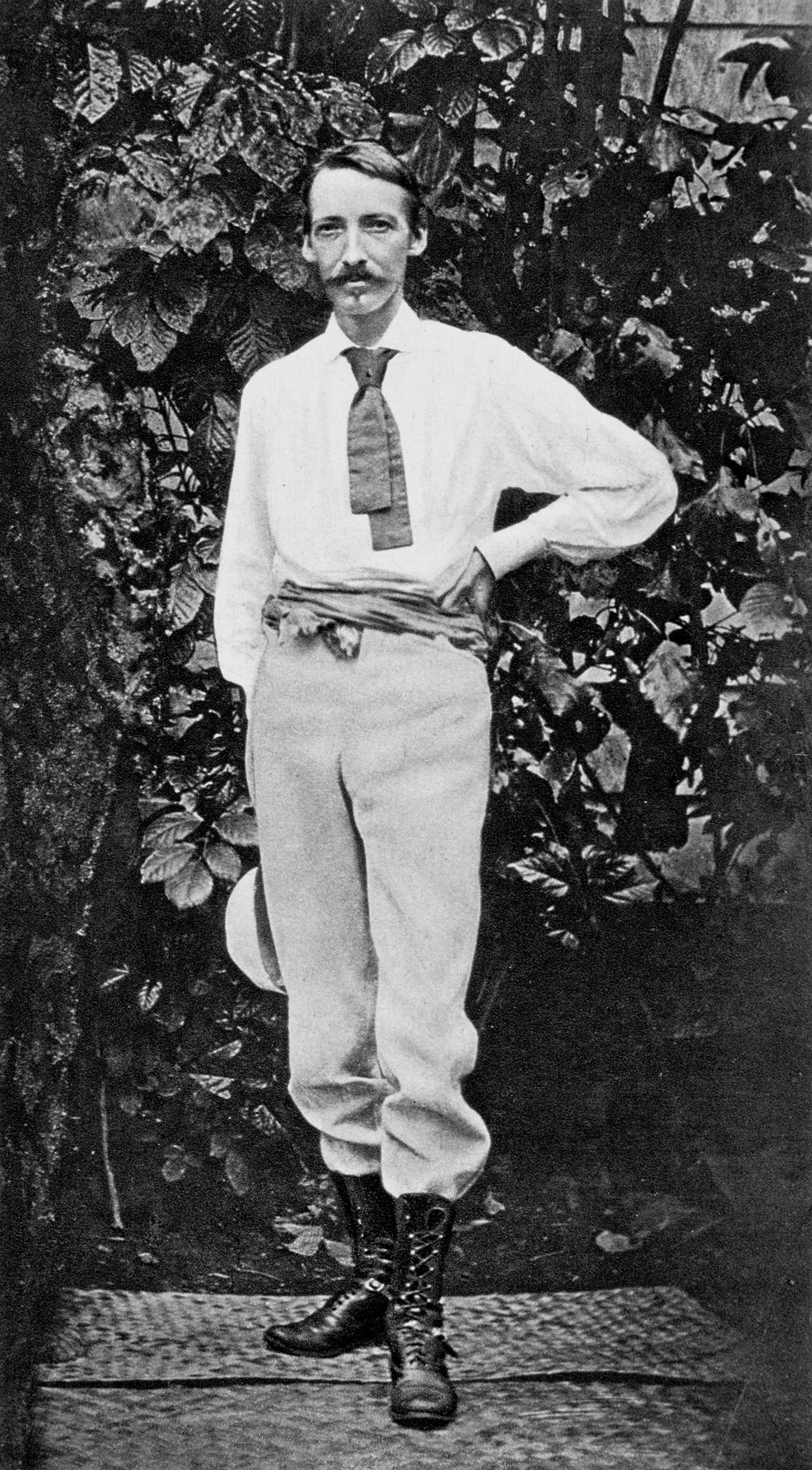
AlamyRobert Louis Stevenson, Vailima, Samoa, 1894

Known today as a writer of adventure stories for youth (Treasure IslandKidnapped) or for his horror classic The Strange Case of Dr. Jekyll and Mr. Hyde, or even for his light-poetry collection A Child’s Garden of Verses, in his day Robert Louis Stevenson was celebrated equally for his essays. He wrote more than a hundred, of which seventy might be classified as personal. Edmund Gosse argued that these personal essays “reveal him in his best character” and that “if Stevenson is not the most exquisite of the English essayists, we know not to whom that praise is due.” Richard Le Gallienne predicted that “Stevenson’s final fame will be that of an essayist.” Once upon a time his essays were routinely offered as models in American college composition courses. Selections of them—from William Lyon Phelps’s Essays of Robert Louis Stevenson (1906) to The Lantern-Bearers and Other Essays(1988), astutely assembled by Jeremy Treglown—have sought to champion his excellence in the genre.

It has not been an easy sell. In part that may be because essays have never commanded the interest or respect that fiction has, but it may also be because the reading public has resisted relinquishing its settled idea about Stevenson as a romantic fantasist. Now Trenton B. Olsen, an associate professor of English at Brigham Young University, has pulled together the most copious selection so far, reproducing not only Stevenson’s dozen or so celebrated essays but also his uncollected published essays and his undergraduate ones. All this gives us the chance to assess the range and stature of a writer who, according to Olsen, was in his day “considered the most successful essayist of his generation.”

Stevenson was born in 1850 in Edinburgh, Scotland, into a distinguished family of lighthouse engineers. His father, Thomas Stevenson, had invented an ocular device for lighthouses and hoped that his son would go into the family business. But Robert showed little interest in engineering, cutting classes at the University of Edinburgh, and tempered his truancy only when his father coerced him to pursue a law degree instead. In one of his most famous essays, “An Apology for Idlers,” Stevenson cheekily argued for “certain other odds and ends that I came by in the open street while I was playing truant…. Suffice it to say this: if a lad does not learn in the streets, it is because he has no faculty of learning.”

Rebelling against his Scottish Calvinist upbringing, with its narrow emphasis on “respectability” (a word he always wrote with a sneer), and turning away from his family’s religious convictions (to his devout father’s deep sorrow), Stevenson asserted that “there is no duty we so much underrate as the duty of being happy.” He took to dressing bohemian, drinking, and visiting brothels. In fact he was hardly idle, insofar as he spent every available moment trying to master his preferred vocation, literature:

All through my boyhood and youth, I was known and pointed out for the pattern of an idler; and yet I was always busy on my own private end, which was to learn to write. I kept always two books in my pocket, one to read, one to write in. As I walked, my mind was busy fitting what I saw with appropriate words; when I sat by the roadside, I would either read, or a pencil and a penny version-book would be in my hand, to note down the features of the scene or commemorate some halting stanzas. Thus I lived with words. And what I thus wrote was for no ulterior use, it was written consciously for practice.

Such a beautiful description of a young author-to-be’s dedication. But wait, there’s more: “I have thus played the sedulous ape to Hazlitt, to Lamb, to Wordsworth, to Sir Thomas Browne, to Defoe, to Hawthorne, to Montaigne, to Baudelaire, and to Obermann.” (Notice the proliferation of personal essayists in his list of models.) He catches himself—“I hear some one cry out: But this is not the way to be original!”—then declares that imitation is the royal road to originality, citing Montaigne’s drawing on Cicero. “It is only from a school,” Stevenson says, “that we can expect to have good writers.”

At a time when the English essay had gravitated toward the more formal, intellectual, stately prose of Thomas Carlyle, Matthew Arnold, John Ruskin, and Walter Pater, Stevenson chose to attach himself to the older, more informal school of William Hazlitt and Charles Lamb. He took up many of the personal essay’s standard themes, such as friendship, talk, walking around, elderly relations, childhood, the past, and everyday objects. (See his playful essay “The Philosophy of Umbrellas.”) He was particularly enamored of Hazlitt, insisting that “though we are mighty fine fellows nowadays, we cannot write like Hazlitt.” In his essay “Walking Tours” he cited Hazlitt’s “On Going a Journey” as being “so good that there should be a tax levied on all who have not read it.”

Stevenson’s own essays are more genial than those of the combative, truculent Hazlitt, but he took from the older writer a liking for energetic, rhythmic prose. He even toyed with the idea of writing a biography of Hazlitt, then gave up the project in dismay when he came across Liber Amoris, the astonishingly frank account Hazlitt wrote of his unrequited infatuation with an innkeeper’s daughter. (There was a prim, Victorian avoidance of sex in Stevenson’s writing, despite his appetite for experience.)

One motivation that kept him seeking adventures was his ill health, a pulmonary weakness he had suffered ever since he was a boy. Few writers have been as consistently aware of encroaching mortality as Stevenson, and he tried to cheat death or at least stay one step ahead of it, cramming as much living as he could into his brief forty-four years. “It is better to lose health like a spendthrift than to waste it like a miser,” he wrote. As the biographer-critic Treglown succinctly put it:

He had always wanted to escape from the certitudes and complacencies, religious, moral and social, of his Edinburgh upbringing, and had been helped in doing so by the travelling his poor health necessitated. Visits to foreign spas were not only desirable, but required.

The title of one essay, “Ordered South,” says it all.

He wrote about hanging out with the Barbizon painters in Fontainebleau, exploring the mountains around the sanatorium in Davos, frequenting the Latin Quarter in Paris. He freely dispensed advice about the art of life—polemics that must be read as reflections of a semi-invalid for whom existence itself was never to be taken for granted. His Thoreauvian preference for enjoying the outdoors instead of being buried in an office can get annoying, especially to those of us who must submit to the daily grind because we haven’t had the advantage of parents who foot the bills. He admitted that his privilege often made him uneasy. Referring to himself in the third person, he wrote:

Some time after this, falling into ill health, he was sent at great expense to a more favourable climate; and then I think his perplexities were thickest. When he thought of all the other young men of singular promise, upright, good, the prop of families, who must remain at home to die and with all their possibilities be lost to life and mankind; and how he, by one more unmerited favour, was chosen out from all these others to survive; he felt as if there were no life, no labour, no devotion of soul and body, that could repay and justify these partialities.

As a young man Stevenson even declared himself a socialist, and though he gave up that political affiliation, he continued to brood about the fate of the poor. In time he would join them, reluctant to keep accepting money from his father and forced to eke out an impecunious living with freelance newspaper pieces. He was especially hard up on his travels through the United States. Having idealized America as a land of democracy and egalitarianism, greatly admiring Whitman’s brief for the common man, in 1879 he set off ill-advisedly across the continent only to have his illusions uprooted by the cupidity he encountered, arriving in San Francisco an emaciated scarecrow. (The trip is described sardonically in his book-length account, The Amateur Emigrant.)

He was crossing the United States to join his intended fiancée, Fanny Osbourne, with whom he had fallen in love on earlier travels. Osbourne was American, ten years his senior, the mother of three children (one of whom had died from tuberculosis), and soon to be divorced from her philandering husband. When they married in 1880, Stevenson found himself the head of a household with steep financial responsibilities, and he could no longer play at being a young man on the loose. In a deliciously witty essay, “A Letter to a Young Gentleman Who Proposes to Embrace the Career of Art,” he warned, “Weed your mind at the outset of all desire of money…. If a man be not frugal, he has no business in the arts.”

His altered domestic situation inevitably affected the subjects of his essays. In a series titled “Virginibus Puerisque,” he wrote trenchantly about women, love, and wedlock. Taking issue with Victorians putting women on a pedestal, he wrote:

That doctrine of the excellence of women, however chivalrous, is cowardly as well as false. It is better to face the fact, and know, when you marry, that you take into your life a creature of equal, if of unlike, frailties; whose weak human heart beats no more tunefully than yours.

Stevenson biographers are divided between those who regard Osbourne as a saintly supporter of the writer and those who claim that her hypochondria, hostility to some of his friends, and mental breakdowns made for endless complications. Regardless, the flowering of Stevenson’s fiction-writing gifts seemed to depend on the stability of his marriage.

A family man, by 1883 he had finally succeeded in becoming a popular novelist. As he stated with rueful candor in his essay “My First Book: Treasure Island”:

It was far indeed from being my first book, for I am not a novelist alone. But I am well aware that my paymaster, the Great Public, regards what else I have written with indifference, if not aversion…. I was thirty-one. By that time, I had written little books and little essays and short stories; and had got patted on the back and paid for them—though not enough to live upon.

That changed with Dr. Jekyll and Mr. Hyde, which made him world-famous. For this classic tale of the divided self, Stevenson claimed in his essay “A Chapter on Dreams,” he drew on the forces of the unconscious, which he called “the Brownies” (a Scottish term for a household fairy):

That part which is done while I am sleeping is the Brownies’ part beyond contention; but that which is done when I am up and about is by no means necessarily mine, since all goes to show the Brownies have a hand in it even then.

Might not the two halves of his sensibility also be seen as representing the fiction writer, exploring half-hidden impulses of desire, and the more rational-sounding essayist?

In the meantime, his essays had deepened and grown more complex. “The Lantern-Bearers” (1888), arguably his greatest essay, begins with a recollection of the “easterly fisher village” where Stevenson spent his vacations as a child:

The place was created seemingly on purpose for the diversion of young gentlemen. A street or two of houses, mostly red and many of them tiled; a number of fine trees clustered about the manse and the kirkyard, and turning the chief street into a shady alley; many little gardens more than usually bright with flowers; nets a-drying, and fisher-wives scolding in the backward parts; a smell of fish, a genial smell of seaweed; whiffs of blowing sand at the street-corners; shops with golf-balls and bottled lollipops; another shop with penny pickwicks (that remarkable cigar) and the London Journal, dear to me for its startling pictures, and a few novels, dear for their suggestive names: such, as well as memory serves me, were the ingredients of the town.

This leisurely opening showcases the finesse of a novelist, employing all five senses. The description of the village continues in rich detail, summoning the pleasures of memory, until, suddenly, we get a jolt, issuing from the gothic side of Stevenson:

There are mingled some dismal memories with so many that were joyous. Of the fisher-wife, for instance, who had cut her throat at Canty Bay; and of how I ran with the other children to the top of the Quadrant, and beheld a posse of silent people escorting a cart, and on the cart, bound in a chair, her throat bandaged, and the bandage all bloody—horror!—the fisher-wife herself, who continued thenceforth to hag-ride my thoughts, and even today (as I recall the scene) darkens daylight.

But all this is preamble: “What my memory dwells upon the most, I have been all this while withholding.” It was the boys’ felicitous practice of carrying lanterns hidden inside their coats:

The essence of this bliss was to walk by yourself in the black night, the slide shut, the top-coat buttoned; not a ray escaping, whether to conduct your footsteps or to make your glory public: a mere pillar of darkness in the dark; and all the while, deep down in the privacy of your fool’s heart, to know you had a bull’s-eye at your belt, and to exult and sing over the knowledge.

Stevenson is here on comfortable ground, celebrating with fondness the knightly bravery of boyhood.

From there he makes a radical shift as he contemplates various adult figures like the miser, whose outward form seems wretched but whose inner life may be teeming with secret joy, or others

who are meat salesmen to the external eye, and possibly to themselves are Shakespeares, Napoleons, or Beethovens; who have not one virtue to rub against another in the field of active life, and yet perhaps, in the life of contemplation, sit with the saints.

The hidden lantern is metaphorically transferred to the inner life of seemingly nondescript citizens, whose imaginative resources we would do well not to misjudge or dismiss too quickly.

Then it is but a brief step to Stevenson’s attack on the realist school of fiction writers, led by Émile Zola, with its emphasis on “cheap desires and cheap fears,” on “that meat market of middle-aged sensuality” and “on life’s dulness and man’s meanness,” which to his mind is “a loud profession of incompetence.” For “the true realism, always and everywhere, is that of the poets: to find out where joy resides, and give it a voice far beyond singing.”

One needn’t agree about Zola to admire the panache with which Stevenson protects a space for the imagination, for dreaming and innocence, associated, characteristically for him, with boyhood. The author of such swashbuckling tales as The Master of Ballantrae and The Black Arrow was defending not only his own work but the whole Romantic school of novelists, and fantasy in general. In his essay “A Humble Remonstrance,” Stevenson took exception to Henry James’s insistence that fiction must draw its inspiration from life, saying that life was too ragged, complicated, and random to serve as a proper model for literary art.

“For to miss the joy is to miss all,” asserts “The Lantern-Bearers.” Stevenson traveled the world over, looking for experiences that might offer him alternatives to his Edinburgh upbringing. He remained intensely loyal, though, to Scottish history, dreaming up plots about the courage of his ancestors. In the end he and his wife and stepson, Lloyd, settled in Samoa, the final destination in his quest for health. He built an estate there, Vailima, and became a revered member of the community, who called him the Writer of Stories. He gathered folktales and took historical and anthropological notes, which were published in newspaper accounts during his lifetime and ultimately gathered in his engrossing posthumous book In the South Seas. He who had once declared it the mission of the writer “to protect the oppressed and to defend the truth” wrote an impassioned brief for the islanders, A Footnote to History, which castigated the colonial powers—England, France, the United States, and Germany—for exploiting them and destroying their way of life.

It is customary for literary critics to argue that Stevenson, in his Samoan years, turned away from the writing of romances and converted to realism. Certainly he needed specific facts to bolster his descriptions of the islanders, especially as he was writing a sympathetic account on their behalf. And his last fictional effort, Weir of Hermiston, which remained unfinished at the time of his death of a brain hemorrhage in 1894, does seem closer than he ever came to psychological realism. On the other hand, the many essays he had been writing for years had trained him in a flexible style that could well be considered realistic, regardless of their defense of Romanticism.

What are we to make, finally, of his contribution to the essay form and of the popular neglect of that body of work? Stevenson, worshiping at the altar of literature, polished every word and page in his essays. His Victorian prose style is highly wrought and impeccably smooth, with long, elegantly turned sentences embedded in lengthy paragraphs, and a sprinkling of Latin, all of which dates him, alas. He was much admired by Henry James and Joseph Conrad, and Jorge Luis Borges considered him one of the masters of English prose. Though Max Beerbohm greatly admired his stories, he found Stevenson’s essayistic prose “too much given to manner in literature” and “over-fond of unusual words and peculiar cadences.”

In his day, despite Beerbohm’s objection, Stevenson was the most user-friendly of writers, but his packed paragraphs require a diligent attentiveness that contemporary readers, fed on shorter, more direct sentences, may find taxing. Under Ruskin’s influence, he wrote knowingly enough about flora and fauna to qualify as a nature writer, though sometimes he would overdo the landscape descriptions. He himself noted, “No human being ever spoke of scenery for above two minutes at a time, which makes me suspect we hear too much of it in literature.”

However we might choose to rate him, we can situate him as the bridge between the early-nineteenth-century giants, Lamb and Hazlitt, and later practitioners of the personal essay such as Beerbohm, Virginia Woolf, G.K. Chesterton, and George Orwell. His sensibility is not skeptically protomodernist, like Montaigne’s; he is solidly old-school, with a sweetness, kindness, charity, wisdom, and tact that must be appreciated for what they are.

Every writer, Stevenson said, “should recognise from the first that he has only one tool in his workshop, and that tool is sympathy.” He exercised his powers of sympathy and detachment extensively in his literary criticism, and it is a pity that some of these essays, like “A Humble Remonstrance” and “The Gospel According to Walt Whitman” (one of the best things ever written about the poet), could not be included in Olsen’s collection, as they were not deemed personal essays. Having championed the personal essay as a distinct subgenre in years past, I have come to appreciate just how blurry is the line between personal and critical essays: Woolf, Orwell, Beerbohm, James Baldwin, and Susan Sontag, as well as Stevenson, all wrote both, and their personalities shone as brightly in one form as in the other. Were a complete volume of his critical essays put together, we would be even better positioned to evaluate Stevenson.

As for the “personal” part of the equation, Stevenson, though keenly self-aware, did not seem particularly inclined to reveal his neurotic quirks and eccentricities the way Lamb or Hazlitt did. We learn the rudiments of his life story from his essays, but there is a sense of propriety that forbids further intimacy. Besides, the invalid existence he led made him more curious about the people he met than about himself; many of his essays are portraits of others. “It is salutary,” he wrote in his essay “An Autumn Effect,” “to get out of ourselves, and see people living together in perfect unconsciousness of our existence, as they will live when we are gone.”

The figure he cuts in these essays is that of a sane, intelligent, compassionate, observant, and good-humored man, eager to act morally but unsure that he will ever be able to. He thought a proper epitaph should read, “Here lies one who meant well, tried a little, failed much.” Essays as a general rule are exploratory and do not invite perfection, but his humble assertion should be balanced by the statement of The Cambridge History of English Literature(1916) that he was “the foremost essayist since Lamb.” In any case let us be grateful for Olsen’s collection, which offers more than enough evidence of this profoundly likable practitioner’s achievements in the essay form.